
Ian Waelder thinks in footnotes. Not just as marginalia, but as the place where the expected reading breaks down and something else opens up. His practice moves between sculpture, sound, photography, and publishing, but what holds it together is an attitude: a preference for the subtle over the immediate, for works that linger in the body after the exhibition has ended. On the occasion of Waelder’s most recent shows at Kestner Gesellschaft in Hanover and the Gesellschaft für Aktuelle Kunst in Bremen, Theresa Weise sits down with him to deepen conversation around his enduring themes.
Theresa Weise: You often alter the architectural logic of exhibition spaces: in “even in a language that is not your own” at Es Baluard in Palma, you constructed a labyrinthine layout. In your show “thereafter” at Kestner Gesellschaft in Hanover, you relocated the entrance. At carlier | gebauer in Berlin, you added a floating ceiling, and in “Zungen” at the Gesellschaft für Aktuelle Kunst (GAK) in Bremen, you changed both the height of the space and its entrance. These interventions seem less about the works themselves than about how a body moves toward them. What is at stake for you in that approach—in designing arrival?
Ian Waelder: For me, exhibition-making is a sculptural practice. Once the works enter a space, they gain a second life. They become part of an environment. When I intervene in architecture, I’m always thinking about the encounter between the work and the visitor. I want to guide how someone arrives at a certain moment in the exhibition. Everything that happens before that moment—the path, the light, the scale—affects the experience. I often speak about “architecture” because there isn't a better word, but for me, it’s really about shaping space and arrival. It can slow time down, redirect light, or change how bodies move. I always imagine a single visitor rather than a crowd. The exhibition is conceived for an individual encounter.
In many exhibitions today, the physical presence of the viewer is taken for granted. Works translate easily into documentation or flat digital images, and mine are no exception. But I think a lot about the person who makes the effort to come—the distances you walk, the sound, the temperature, the shifts in scale or disorientation. That person activates the work and gives meaning to the subtleties. At GAK, the room is scaled to the height of a child, which immediately changes how an adult experiences it. There can be discomfort in that which shifts the awareness of your own body in the space.
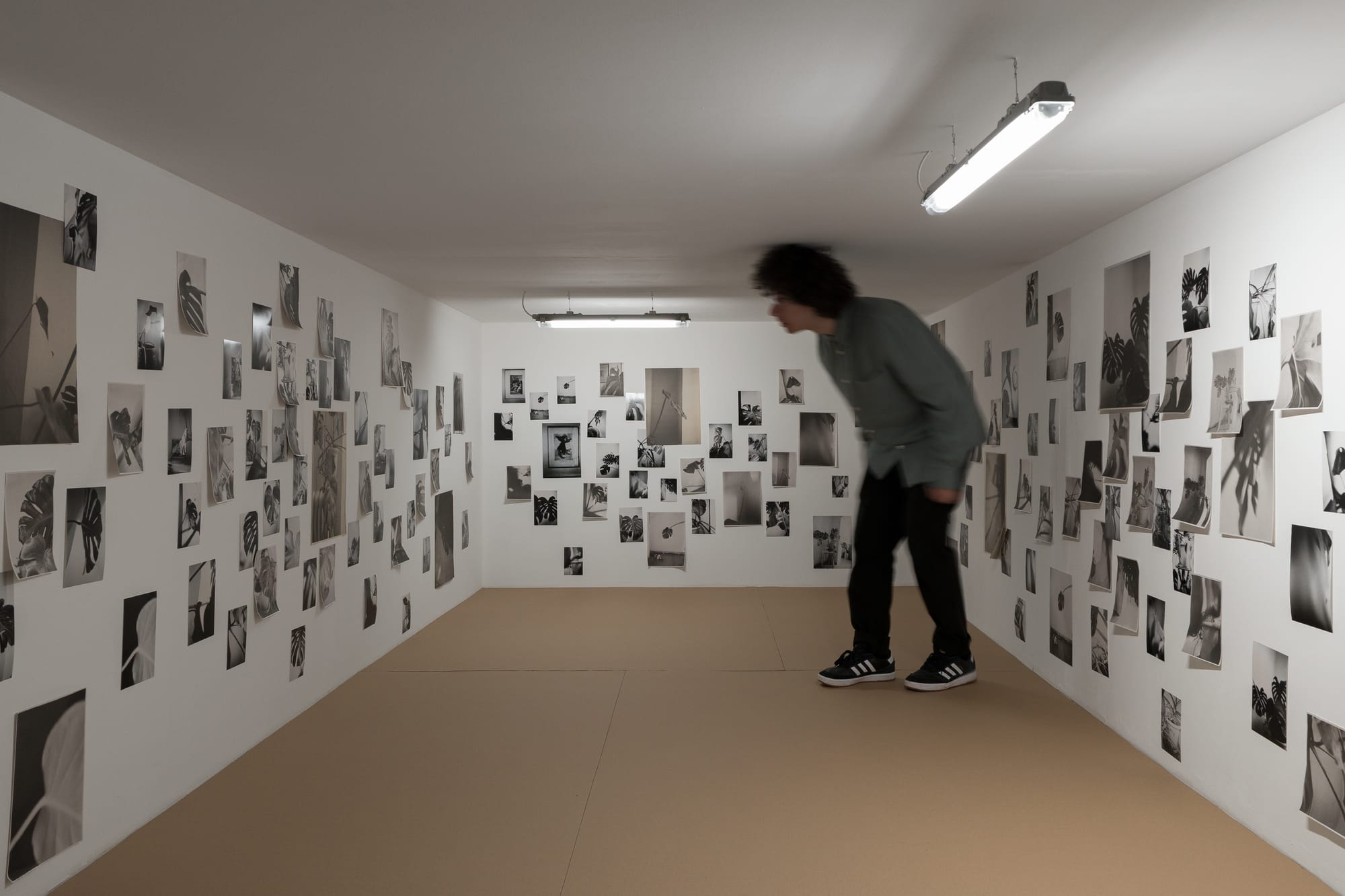
Ian Waelder, Zungen, installation view at Gesellschaft für Aktuelle Kunst (GAK) Bremen, 2026. Courtesy the artist, Gesellschaft für Aktuelle Kunst – GAK (Bremen), carlier | gebauer (Madrid/Berlin), diez (Amsterdam). Photo: John Forest
When discussing your work, the term “footnotes” often appears—both in writing about you and in the way you describe your own practice. It seems a precise way to think about the movement between what is immediately visible and what is hidden. Could you talk about why this idea resonates with you?
It is maybe an unconscious influence from Georges Perec that makes me think of making from the practice of writing, using space as a page. A sound can be a mark, a sculpture, a paragraph, or lines or spaces. I tend to think of some works as sculptural footnotes: that arrival into another loaded space, reached from a small indicator on the page. And from there, everything moves or interconnects.
I’m thinking of “cadence” at carlier | gebauer—part of the installation was a water leak coming from the ceiling. The impact of the droplet on the floor was amplified by the hidden loudspeakers. If you spent some time at the exhibition, you would notice it. During the show, it was rainy in Berlin, so one wouldn’t fully know if it was on purpose or if it was an actual leak from the gallery. But that detail of the amplified droplet that merged with the piano notes every few minutes created a parallel life and asked the viewer to stay a little longer, while the floor kept deforming from the water over the length of the exhibition.
I take influence not necessarily from specific works but from attitudes. I think of Andy Kaufman often—how he thought of the TV as an object with a specific relationship to its audience. People kept a certain distance from the screen, settled into the sofa, and he was interested in disturbing that contract with a glitch. In a way, the footnote isn’t just a secondary space; it’s where the disruption happens, where the expected reading breaks down, and something else opens up.
Which brings me to the sense of “lingering” one can feel in relation to your work. Why are you interested in suspension?
I’m interested in works that remain with you after you leave. Not something that hits you immediately like a punch, but something subtle that slowly builds. Ideally, the experience continues in the viewer’s mind. I once made a sound piece based on whistling. The work isn't just the sound in the gallery; it’s the moment when someone leaves the exhibition and later finds themselves whistling the melody at home. In that way, the work spreads into everyday life and becomes something else.

Ian Waelder, cadence, installation view at carlier | gebauer, Berlin, 2025. Courtesy the artist, carlier | gebauer (Berlin/Madrid). Photo: Andrea Rossetti
I remember the whistling in “even in a language that is not your own” at Es Baluard. You used the same melody at Kestner Gesellschaft, though it sounded different. Where does it come from, and how does the same melody interact in different exhibitions?
It’s a recording of my grandfather, Federico Waelder, playing the piano—so far the only existing trace of his music. I discovered it almost by accident during the first lockdown in 2020 at my parents’ house in Mallorca. Since then, it has repeatedly found its way into my practice in various forms: it’s been played on a radio in Frankfurt, whistled from memory, and recorded for the show in Palma. In one piece, I combined the recording with the sounds of all the shoes I had accumulated since my teenage years—I threw them down a staircase and recorded the sound. When I layered that with the piano piece, something unexpected happened: the rhythms aligned strangely. The piano melody moves up and down in a very tense structure, while the falling shoes created a random percussion that somehow complemented it. The coincidence was fascinating because both sounds suddenly seemed to belong together. For Kestner Gesellschaft, I invited my father to sit in front of a piano and to try to play the same melody from memory, while not knowing how to play the instrument. So in the exhibition, you'd hear excerpts of one to four seconds, followed by a minute of silence.
You often collaborate with your father, who is an artist himself. How did this collaboration come about, and what meaning does it carry for your work?
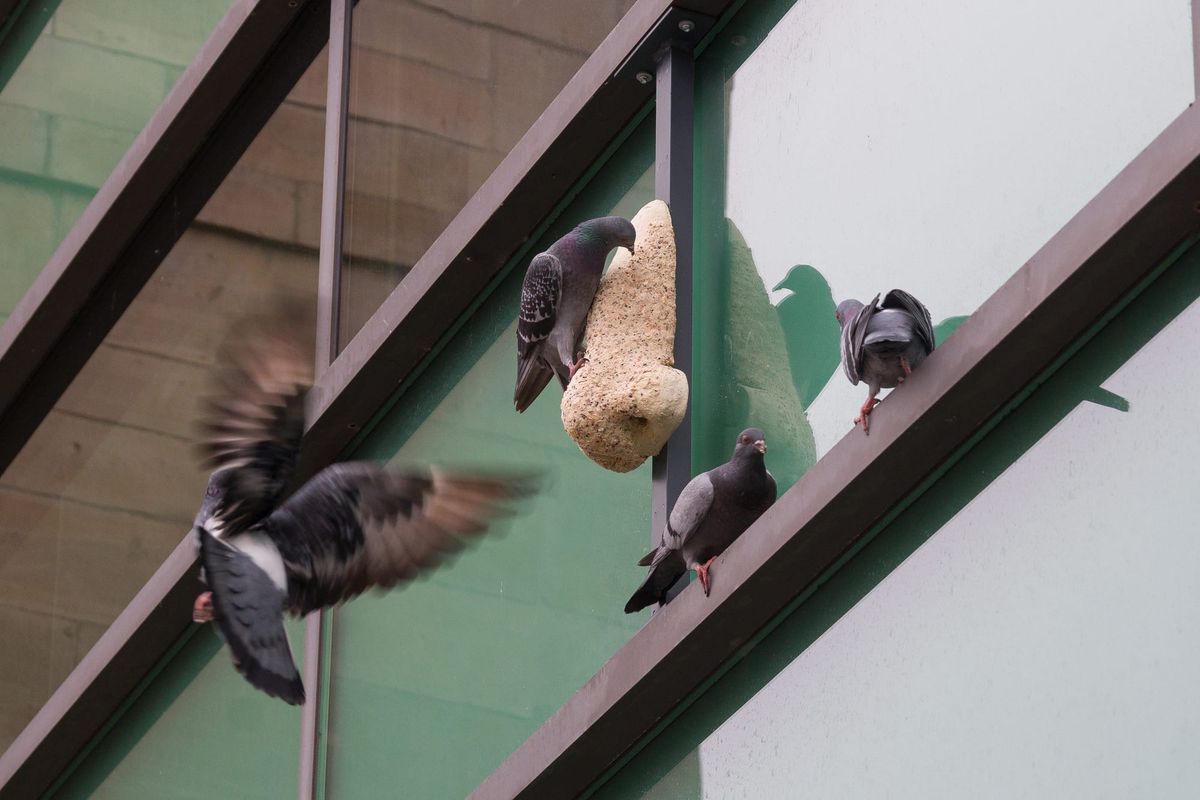
When I first moved to Germany, I became very aware that I was the first member of my family to return after my grandfather had fled during the Nazi period—he was the only family member who survived. I started speaking with my father more about that history, and eventually those conversations turned into making things together. Sometimes I propose an idea, and he responds with his own interpretation. The process can feel very similar to a father–son dialogue. For the Kestner Gesellschaft exhibition, I asked him to sculpt a large version of his own nose. We produced several copies and covered them with birdseed so that birds would gradually eat them away. The authorship becomes shared, although the structure of the project is usually initiated by me.
I want to think about the recurring themes of your work. What’s the role of memory and archive in your practice?
Memory for me is deeply existential and concerning. It’s also such a broad concept—everything is memories. I’m interested in how we archive in ways that refuse automation. Today, our phones record everything, and our brains remember less and less. I’ve always had anxiety around recording things. As a child, I used disposable cameras and a sound recorder. Later, when I skated, I filmed and photographed my friends and documented our progress. Without realizing it, I was already building an archive. That early relationship to documentation still shapes how I think about images and traces.
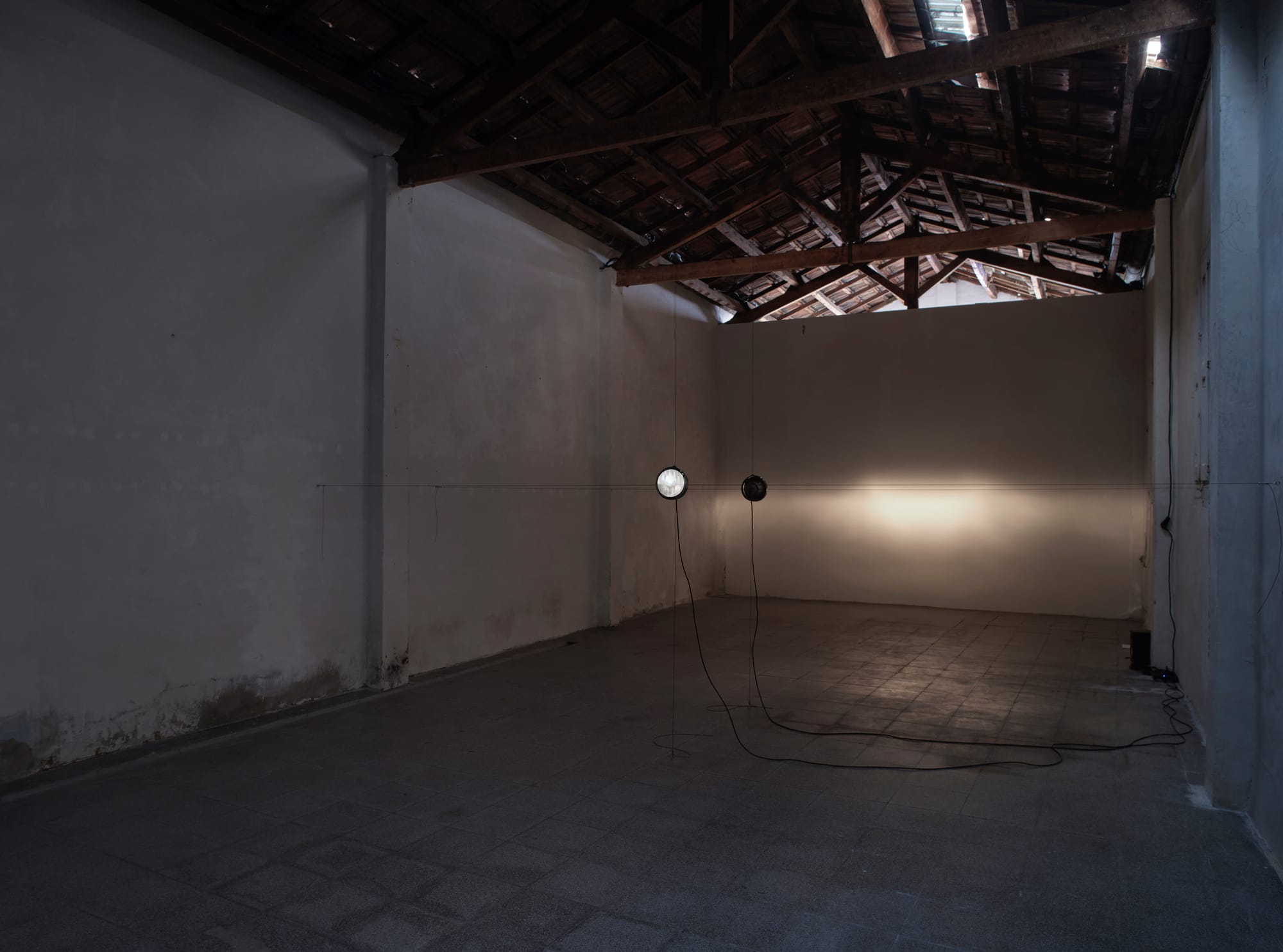
Ian Waelder, Is it like today? Installation view at ethall, Barcelona, 2022. Courtesy the artist and ethall, Barcelona. Photos: Juande Jarillo
Objects carry memory in your work. The photographs in Bremen depict a monstera plant that has been in your family since you were born. The Opel Olympia, shown in your exhibition at “Is it like today?” at Ethall Gallery in Barcelona, is connected to your family history. What’s their meaning and how do you operate them to tell a story?
My mother received the monstera in the hospital room in Madrid the day I was born, and it has been with our family ever since—first in Madrid, later in Mallorca. I rediscovered it while looking through family photo albums. In one picture, I saw myself as a baby with my mother’s boots, and the plant appeared in the background. When I looked up from the album, the plant was still there in the room. That moment triggered something. Since then, I’ve been photographing it from many angles to a point of absurdity. In Bremen, I showed all the analog photographs I’ve taken so far, around 160—blurred or imperfect pictures included. Some are traditional chromogenic prints; others are inkjet prints made in my studio on newspaper. I'm interested in the temporality that comes with those materials. Photo paper suggests permanence, while newspaper is fragile and may fade over time. The images have their own organic lifespan. I like the idea that the installation doesn’t aestheticize the subject but presents the entire accumulation. The images are installed almost casually, like posters or notes quickly taped to a wall. The room itself becomes a sculpture.
The car belonged to my grandfather and had to be sold before he fled Germany to exile in Chile. It allows me to approach that history without turning it into a purely documentary narrative. The idea of a family car is something almost everyone can relate to, so I started collecting film stills where it appears in the background, or photographs of other families posing with their Opel Olympias in the 1930s and 40s. I don’t know who those people are, but the images suggest parallel lives and histories. At the show in Barcelona, visitors were blinded by the car’s headlights, which were installed at my eye level. I'm not interested in illustrating history directly—I prefer to keep those references somewhat in the background. Visitors don’t necessarily need to know the full story, and sometimes it’s enough that they leave with a subtle sense of unease. What interests me is how these things affect us as human beings.
You grew up in Mallorca and later studied at the Städelschule in Frankfurt. How have those places influenced your practice, sense of space, and time?
Growing up in Mallorca was something quite special. It carries a long tradition of hosting artists and writers, especially before the Civil War and the dictatorship. Gertrude Stein once said something to Robert Graves like “Mallorca is paradise, if you can stand it.” John Cage wrote music for the first time while on the island. From the 70s on it was full of incredible artists and movements that continuously responded to the political climate. I was lucky enough to start as an artist in Palma around 2011, before the current brutal gentrification of the island. There were artist-run spaces, where I did my first exhibitions, which are now long gone. Most artists I know have no option but to leave the island, at least temporarily, just to return to a place where living and having a studio are almost impossible. Stein’s quote today is more like “Mallorca is paradise, if you can afford it.” I went to Barcelona in 2016 and later ended up in Frankfurt. I didn’t have an Abitur [high school diploma], so I could only attend a school that didn’t require a degree, and that was affordable. My good friend Diego Diez, who at the time was studying at the Rietveld in Amsterdam, recommended I apply to Frankfurt. I knew almost nothing about it, barely any of the professors except Peter Fischli. My years there were difficult at first, but it turned out to be the best decision I’ve made. I wasn’t particularly social—I’d already done enough of that as a teenager. I was happy to work, have a studio, go skateboarding after, and visit exhibitions that shaped those years: the programs at Portikus and MMK, the conversations with professors, peer artists, and curators. I've always learned from trying things and observing, so being part of such a rich context was as challenging as it was essential.
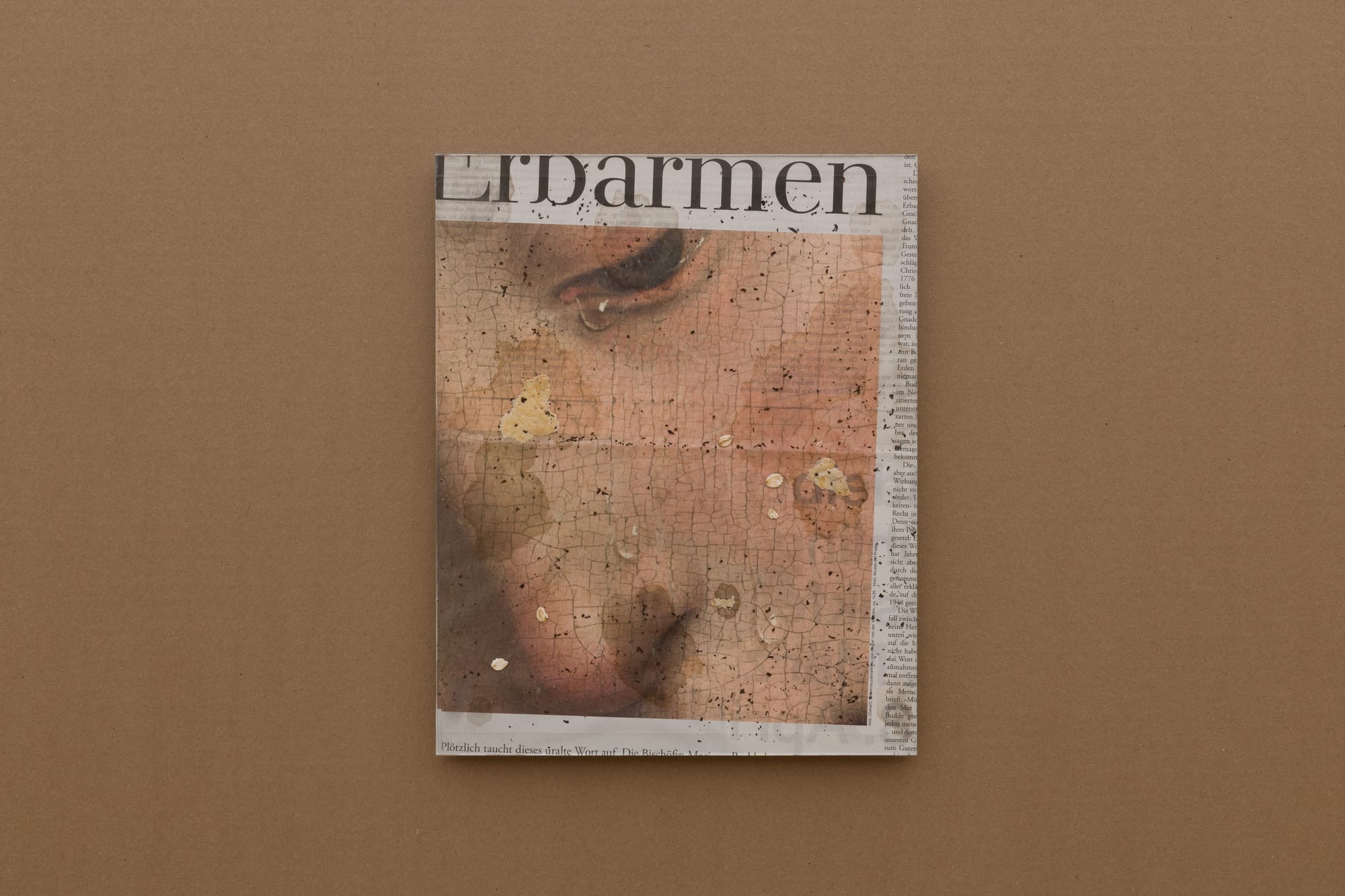
Ian Waelder, Mercy (Leak), 2025. Black tea leaves, butter, croissant, and oats on newspaper (Die Zeit, January 30, 2025), Artglass AR 99 Water White, acid free board, tape on Dibond, stainless steel. 30 x 24 cm. Courtesy the artist, Kestner Gesellschaft (Hannover), carlier | gebauer (Madrid/Berlin), diez (Amsterdam). Photo: John Forest
Your interests extend to publishing as well, with Printer Fault Press, and you are a skater. How are these practices in dialogue with each other, and how do they enter into conversation with your work?
Both come from the same impulse—the idea that you can produce things yourself, with the means available to you. When I started skating in the early 2000s, the entire culture was made from within: skaters produced the magazines, the videos, the graphics, the clothing. That mentality stayed with me, and it’s probably what drew me to publishing. Through Printer Fault Press, I found a community that felt open and non-elitist in the same way skating once did: people collaborate, exchange, and support each other naturally. Much of the institutionalized art world runs on hierarchy, which I find suffocating. Both skating and publishing offered an alternative logic—you make things because you want them to exist. I barely find time to skate nowadays, but that attitude is still very much part of how I work.
//
Ian Waelder (Madrid, 1993) is an artist and publisher from Mallorca. He graduated from the Städelschule in Frankfurt am Main in 2023 and is currently a fellow of the Laurenz–Haus Stiftung in Basel (2025/26). Recent solo exhibitions include those at Gesellschaft für Aktuelle Kunst (Bremen, 2026), Kestner Gesellschaft (Hannover, 2025), carlier | gebauer (Berlin, 2025), and Es Baluard Museu d’Art Contemporani (Palma, 2023–24), among others. Group exhibitions have taken place at institutions and galleries including Kunsthalle Wien (Vienna, 2025), ifa Galerie (Berlin, 2025), nsdoku (Munich, 2025), Petrine (Paris, 2025), Fundació Antoni Tàpies (Barcelona, 2024), and La Casa Encendida (Madrid, 2014). He's been an artist-in-residence at WIELS Center for Contemporary Art (Brussels, 2024), and has received grants including the basis Hessisches Atelier Programm (2025–29) and the DZ BANK Kunststiftung Förderstipendium (2023–24).
Cover Image:
Ian Waelder, Self-Portrait As My Father's Nose, 2025. Façade installation of eight papier-mâché casts taken from a clay sculpture by Juan Waelder, the artist’s father. Coated with a mixture of fat, seeds, and agar-agar, intended to be eaten by birds and insects. 34 x 17,5 x 12,5 cm per piece (8 in total). Courtesy the artist, Kestner Gesellschaft (Hannover), carlier | gebauer (Madrid/Berlin), diez (Amsterdam). Photo: John Forest
Theresa Weise is an art historian, author, and editor. She was editor and social media director at the art magazine PASSE-AVANT from 2017 to 2021, and she has held positions at SCHIRN KUNSTHALLE FRANKFURT, Kunstverein Hamburg, and the Städel Museum.