
For the first time, AWC devotes an issue to the visual and editorial logic of a single artist, inaugurating a new cycle with an issue called “Synthetics”, in collaboration with Mi Valedor, the street newspaper of Mexico City. Mariana Castillo Deball’s work embodies forms of synthesis in her weaving of myth, history, material, and ecology, creating forms that inhabit the world while allowing it to shift and find resonance. Her works trace relations between human and nonhuman life forms, incorporating ancestral knowledge and contemporary experience, as they move across pages, streets, and cities.
Castillo Deball’s works evoke the story of The Tower of Babel, which in Hebrew mythology is symbolic of confusion and in Arabic evokes disorder and multiplicity. The Tower of Babel represents at once architecture and language, a project of impossible knowledge whose ruin leaves traces across a polyphony of tongues and forms. Mariana echoes this unsettled complexity, composing fragments that gather, unfold, and multiply, inviting us to navigate geographies of emergence, uncertainty, and fecundity.
Mariana Castillo Deball, Feathered Changes, 2026. Installation view, detail, and documentation of on-site work at LACMA
Five years ago, I learned of how Mariana had translated the French economist Thomas Piketty’s statistics on wealth inequality and extreme poverty from his book Capital in the Twenty-First Century into a marbled plaster wall for the lobby of an insurance company. An incandescent red pattern crossed the surface, turning abstracted economic data into a sensuous, almost living presence. Later, I invited her to enter a quiet conversation for the issue of AWC we made for the German Pavilion at the Venice Biennale for Architecture, known as “The New Serenity”, which imagined architecture as prophecy. Mariana’s piece effortlessly invoked the agency of material itself, its ability to record, conceal, and transform information.
The forms of Mesoamerican deities also feature in Mariana’s work, as she connects the outlines of ancestral myth to contemporary life. The figure of the Aztec goddess Coatlicue, for example, resonates beyond the page, shaping a sensibility in which death and survival, absence and presence, become inseparable. She produces paper to then destroy it and reshape it again, always to depict Coatlicue’s spirit.
This transformation suggests that value accrues through perception, memory, and collective imagination much as it is fragmented and rebuilt in the form of the goddess, emulating the transgression from information to manifestation. In our pages, that plaster is turned into a space where social, historical, and aesthetic concerns intersect.
Mariana Castillo Deball, Feathered Changes, 2026. Installation view, detail, and documentation of on-site work at LACMA
This sensibility finds another expression in the everyday objects that populate the bustling streets and social layers of London. Ceramics, combs, and amulets discarded long ago carry traces of a mode of life that persists beneath the city’s surface, fossilized yet animated. In Roman Rubbish, a commission for Bloomberg Space, Mariana excavated these objects from the Thames, reassembling them into columns, wax panels, and installations that make visible the harmonies of daily existence and the persistence of memory.
Each column tells a different story: one addresses the accumulated fragments of archaeological practice, another of vessels that marked domestic life, yet another centers the charms and personal objects that once sat close to the body. Mariana turns these remnants into a language of memory and presence, inviting viewers to encounter the traces of lives long passed while reflecting on what survives and what is lost.
The sensibility that guides Mariana’s interest in deities and ancestors extends to the nonhuman beings that share our cities. For the Triennial of Bruges in 2024, she collaborated with local beekeepers and the collective Bisou to create a ceramic landscape in which humans, bees, and plants coexist. Drawing from anthropic forms of hive-making, the structures allow the bees space to move and thrive while guiding humans along paths that reveal a delicate choreography of care and attention. This project resonates with her observations in Los Angeles, where her attention turned to native animal traces, left as they navigate the city’s ecology in the midst of human activity. In both cases, Mariana shapes environments that honor coexistence, making visible patterns of life and interdependence that are often obscure.
Mariana Castillo Deball, Feathered Changes, 2026. Installation view, detail, and documentation of on-site work at LACMA
Walking through the town, I followed a pattern on the pavement that became the magnified silhouette of a woman's profile (2021) traces the profiles of a woman whose remains were discovered locally. Archaeological replicas are embedded along the walk, appearing partially visible and partially hidden, inviting discovery and reflection. The project exemplifies Mariana’s approach to public space, in which each city becomes a living archive. She gathers the traces of history, landscape, and daily life, allowing them to engage forms and questions that are specific to each location. The work is attentive to the rhythms of the place and its inhabitants, creating interventions that are neither imposed nor generic. Across the paths she constructs, the city itself becomes a participant, its histories, stories, and textures shaping an intimate yet expansive experience.
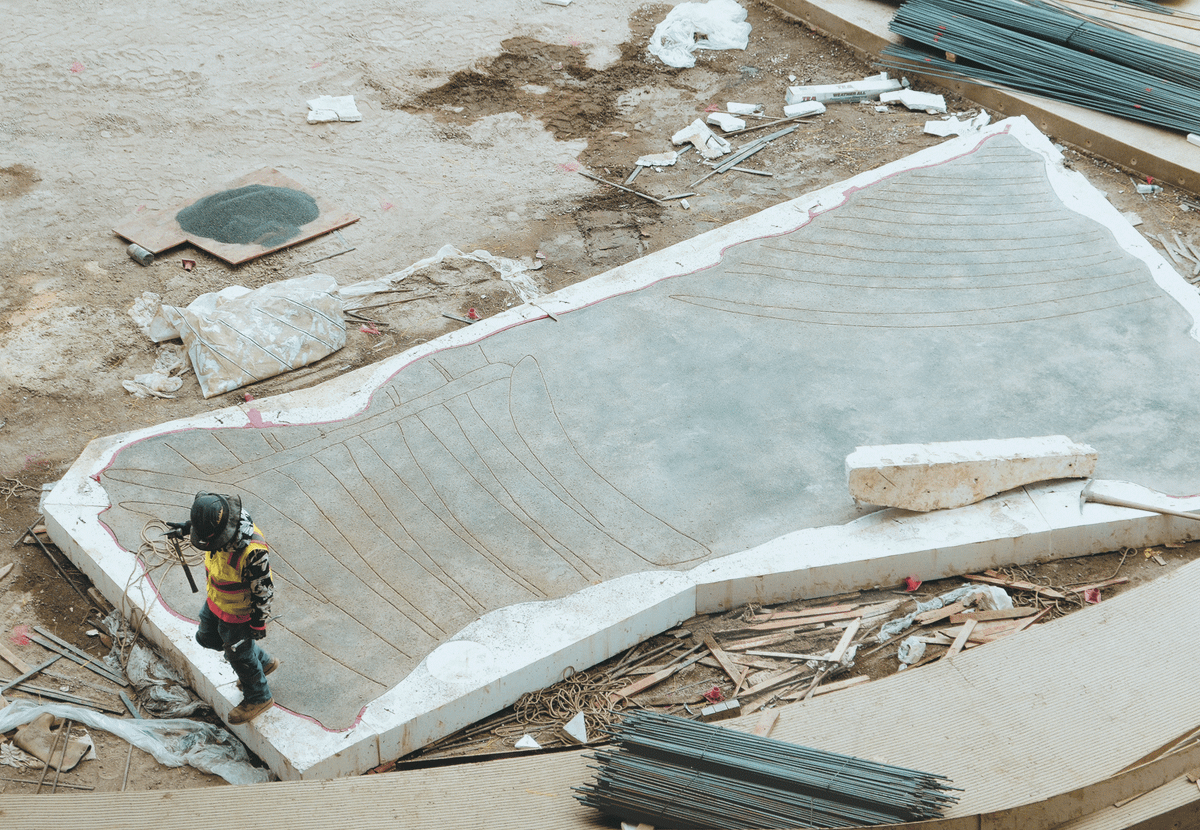
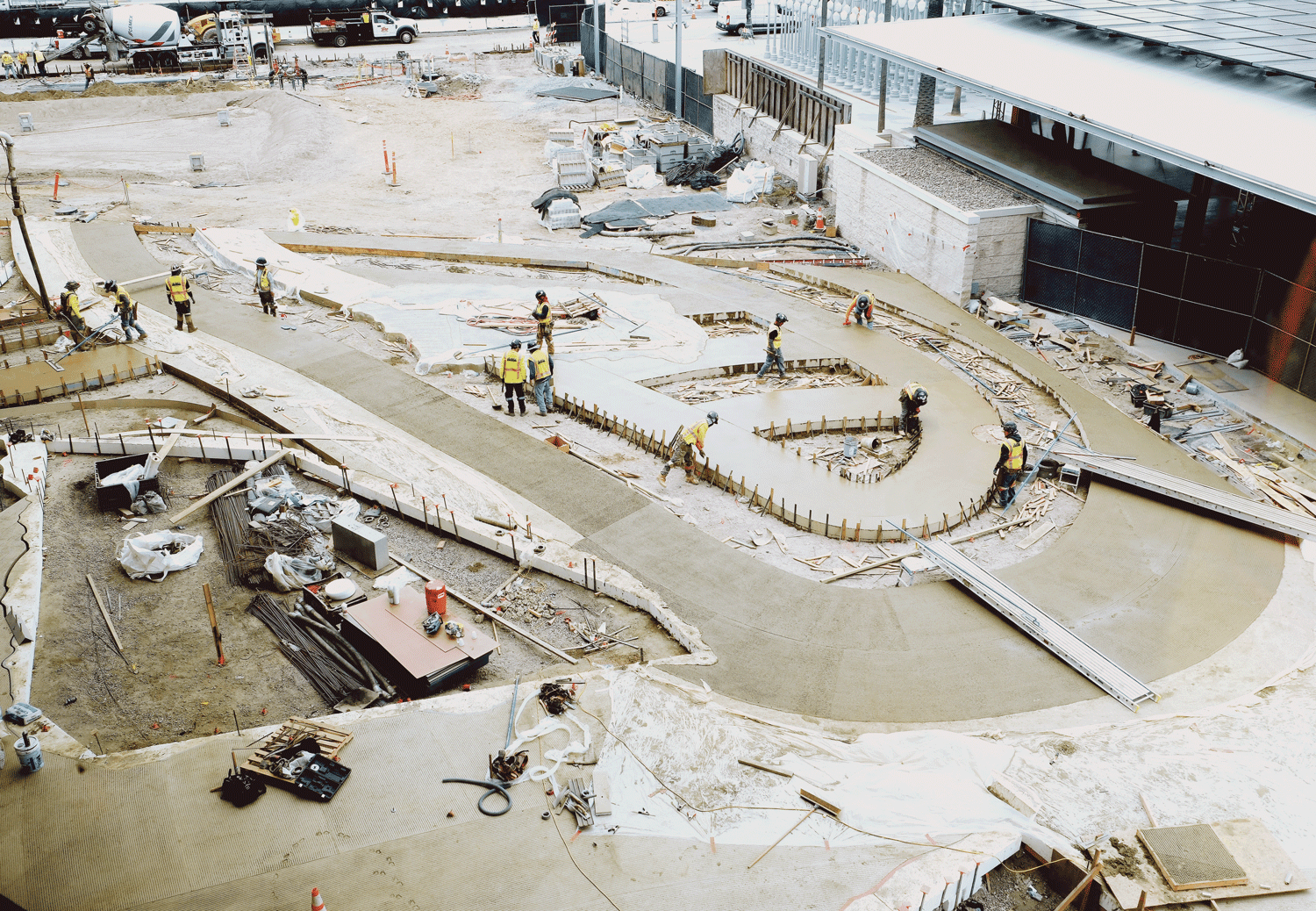
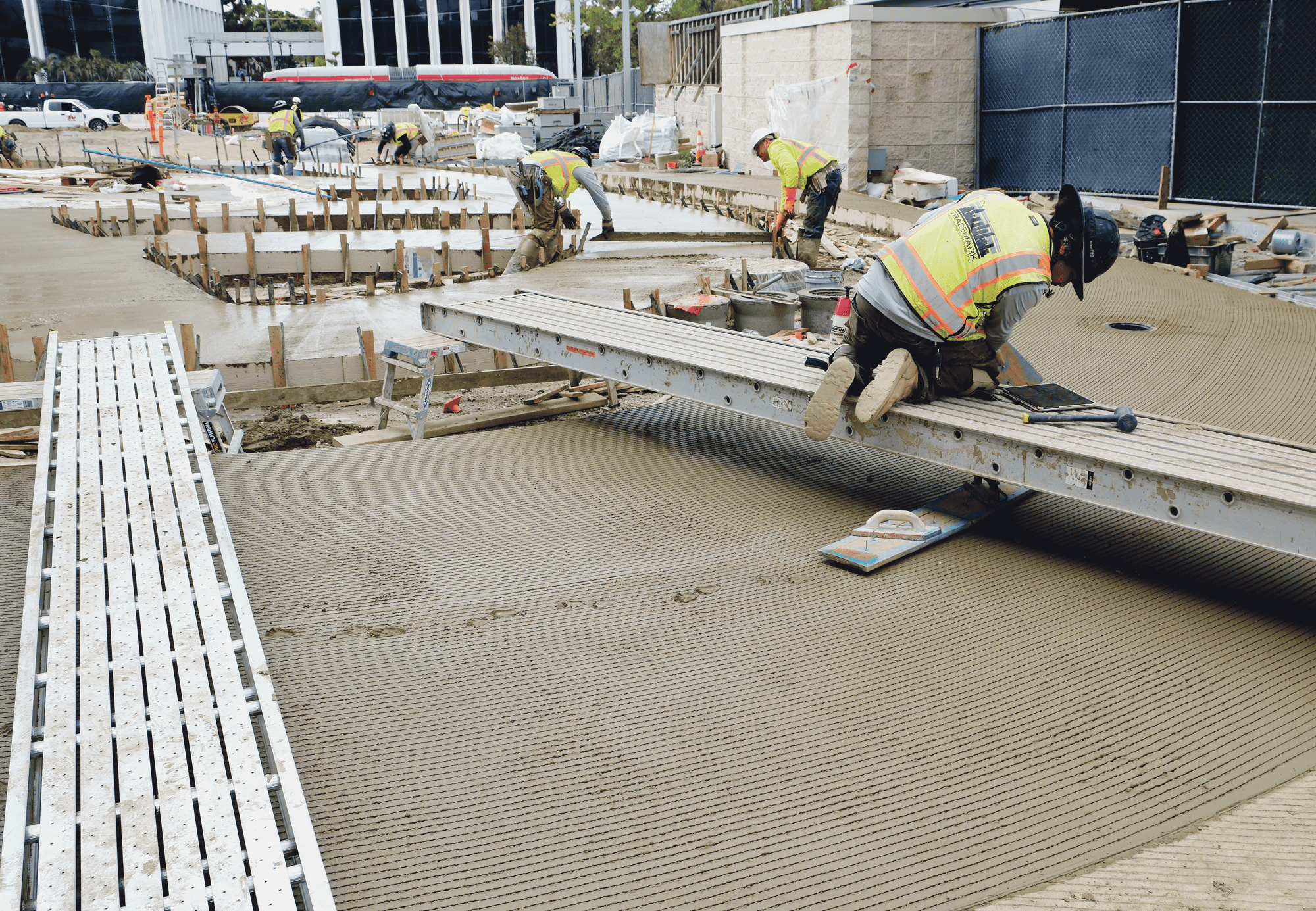
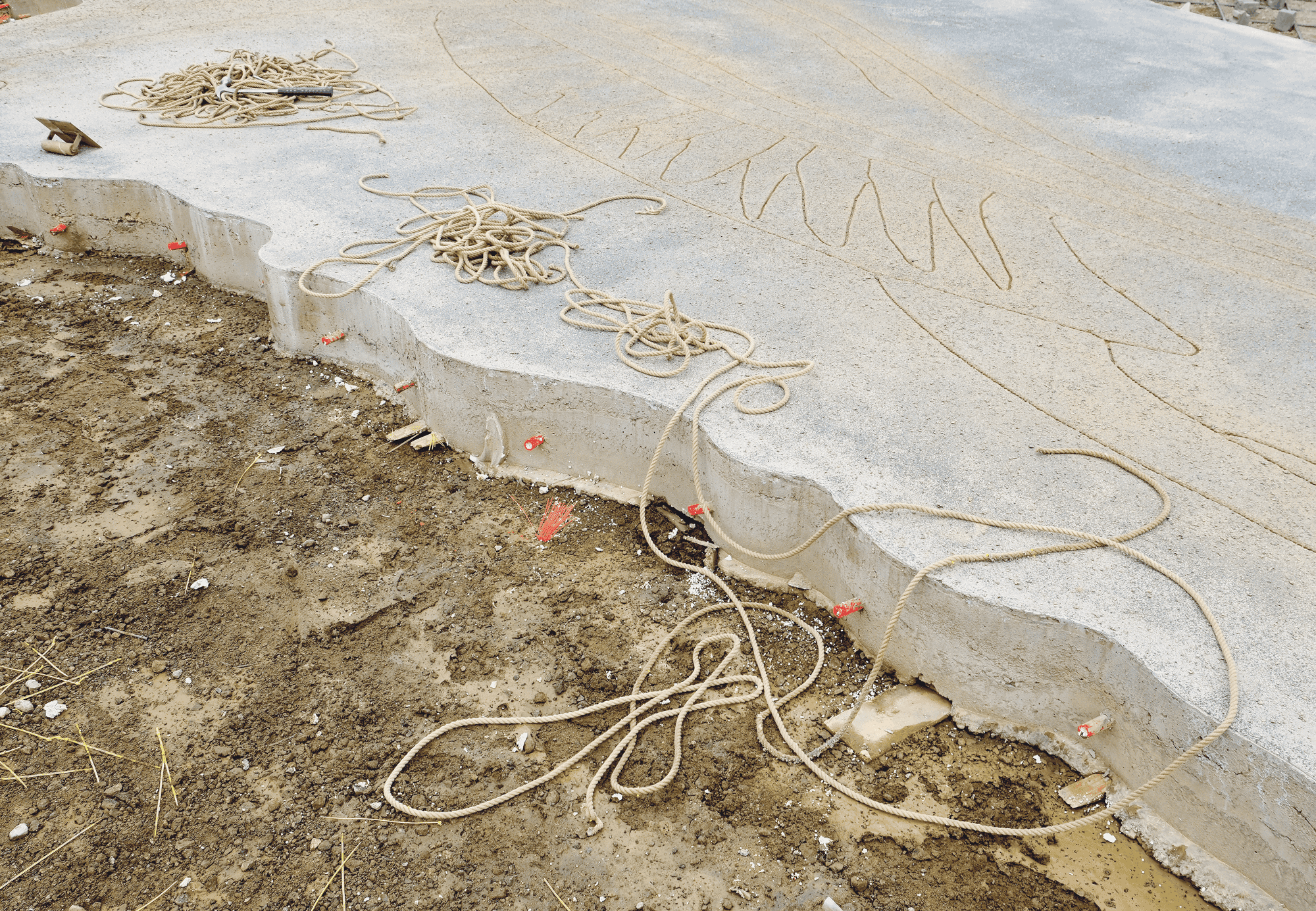
These animating threads converge in Feathered Changes, which wraps the exterior of LACMA in undulating patterns that bear the presence of Quetzalcoatl, the feathered serpent and cosmic matron of the arts of Aztec myth, as well as the depth of a zen garden. Animal traces of a bear, a wolf, a racoon, a bison, a beaver, a road runner, and a snake from California move across the 220,000 square feet, marking space and time and drawing attention to the entanglement of human and nonhuman life, as well as to the historical and ongoing transformations of the territory presently known as the United States.
This work responds to Peter Zumthor’s architecture, which turns concrete into a reflective landscape where myth, memory, and the rhythms of the world are seen to be inseparable. Quetzalcoatl’s fragments appear as guide and witness, connecting ancestral knowledge to the present and to the forces of displacement, labor, care, and survival that shape our lives.
//
Cover image:
Mariana Castillo Deball, Feathered Changes, 2026. Installation view, detail, and documentation of on-site work at LACMA
María Inés Plaza Lazo is editor-at-large, publisher and founder of Arts of the Working Class.