
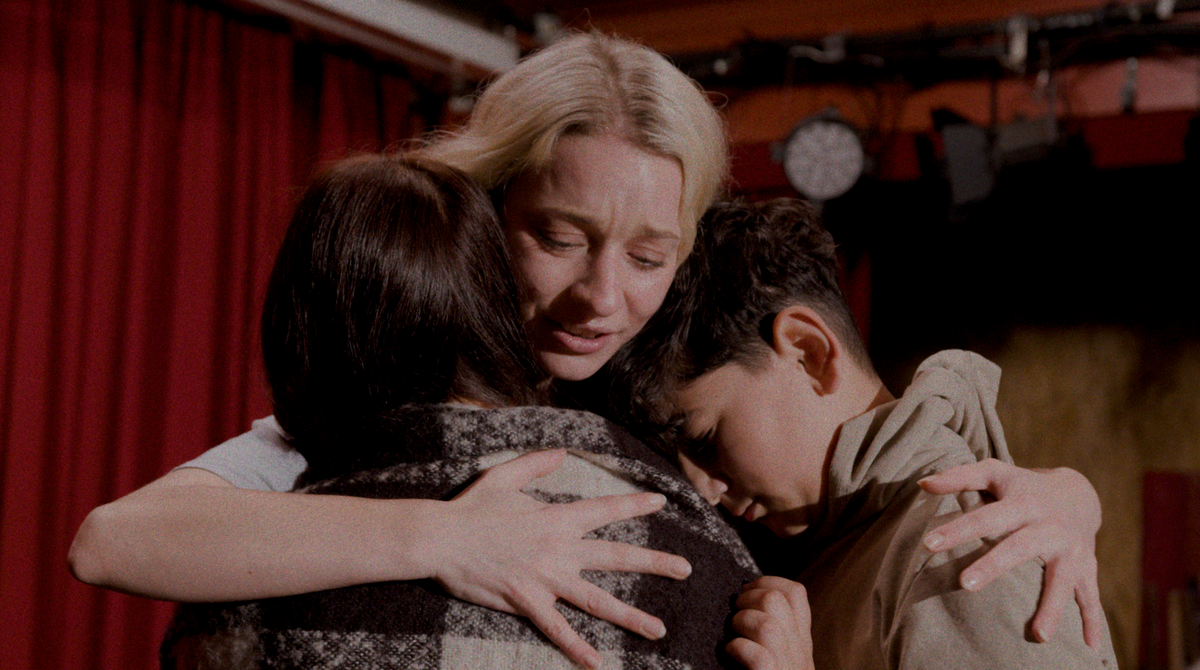
Daniel Hopp turned Leopoldplatz in Berlin-Wedding into a sociocultural border zone: From August 2025 to January 2026 the artist exchanged cultural funding for the stories from people on the street. But through the filmic adaptation these stories also transgress their allotted side — all the way into the bourgeois institution of art. Fictional Healing is one outcome of this action.
Installation View by Max Eulitz
The exhibition at the Kunsthaus Hamburg is formally related to a location only 500 meters away that offers integrated consumption spaces for people struggling with drug addiction. These are excluded from the general perception since March 2024 by a fence that runs in a straight line through the Drob Inn-adjacent August-Bebel-Park. The social expulsion already at work is thus further reinforced by urban planning interventions cursed with a monumental stupidity. By contrast, the fences of the multi-part video installation do not immediately reveal the underlying logic of inclusion and exclusion: The individual parts of the ongoing video work are positioned on both sides. The potentialization of the lining power through silver-sprayed drywall walls at one end of the fences is undermined by transitions enabling gaps at the other end. Upon entering the exhibition, the imposed experience of the boundary is thus oriented toward its disintegration. The restless score by Johannes Haas, which haunts the ear before the eye can seize its cinematic counterpart, does the rest.
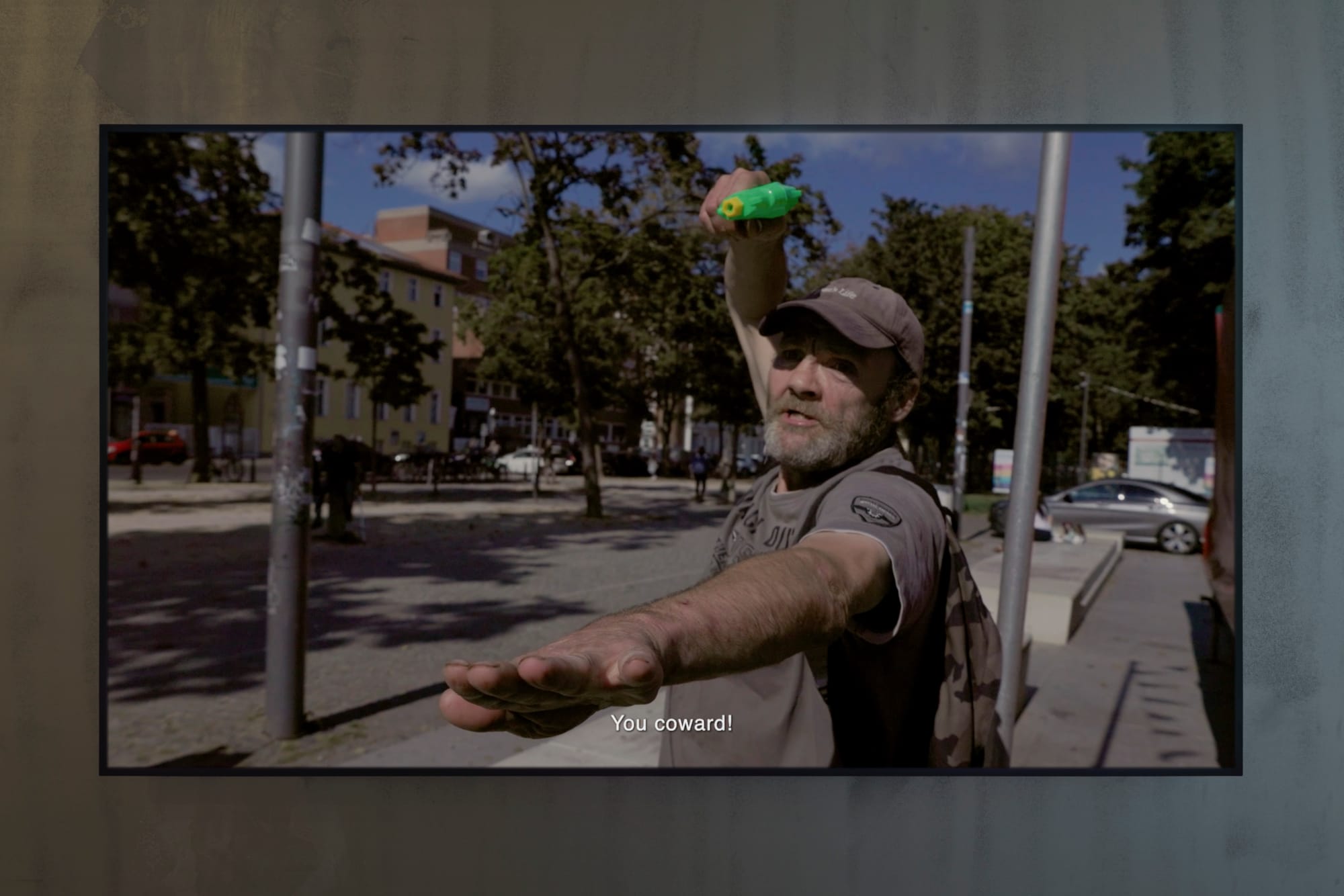
Vido Stills Courtesy: Daniel Hopp & Ania Maria Wanda
The erosion set in motion brings to light Babarossa, Saskia, Toni, and Ahmad, among others. Acquaintances from Leopoldplatz. Five screens mediate conversations with people whom visitors of art museums generally keep at a distance. The prerequisite is the suspension of repulsion, respectively the restitution of the repudiated relationship. The requirement of wearing headphones as a threshold to the documentation of conversations, which served as the foundation for the subsequent video work, is constitutive of an encounter on eye level. This bridging also brings the mediator into view: With his drug experiences preceding his artistic career, Daniel Hopp lays open the path to a different relation to oneself. The embodiment of the convergence of street and art makes the contingency of this — albeit fundamental to bourgeois society — separation obvious. Particularly since both are habitually banished to the same transcendence of capitalist valorization: Ruination appears as the abject side of the same desired uselessness, from which art represents the sublime side. The exposed correlation subjects the cultivated purity of art to the anxiety-laden impurity of the street. This defilement is brought to life by retracing the course of the stories from Leopoldplatz to the Kunsthaus Hamburg – for the cinematic realization of these stories to be viewed, the opening up of aesthetic semblance from below must be reproduced. The reversal of the (in)visibility of the base and the lofty culminates in the screening of the concluding film in an off-space secluded by three additional drywall partitions. Even if this work fulfils a conventional exhibitionary purpose, it cannot be experienced separately from its practical genesis.
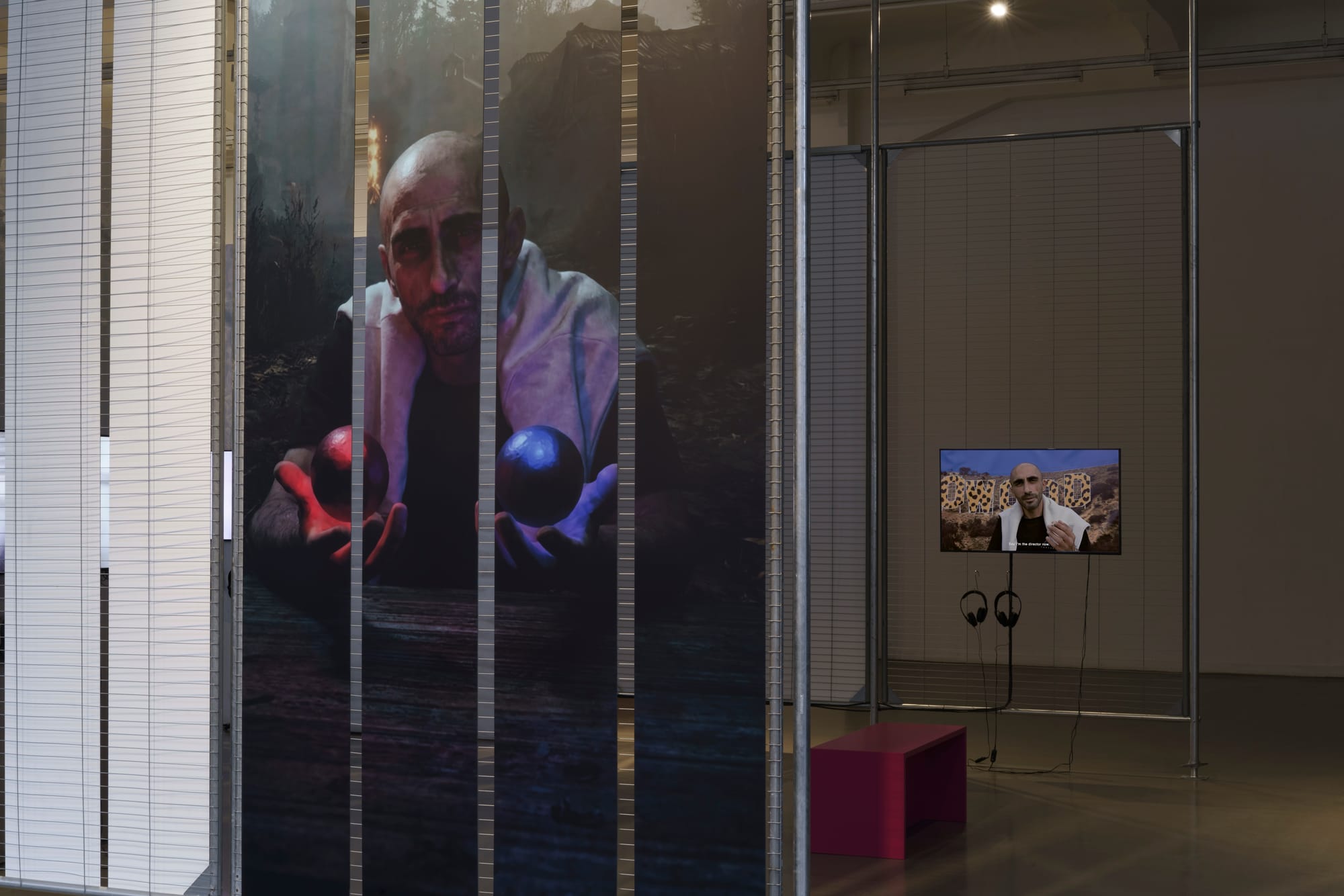
Installation View by Max Eulitz
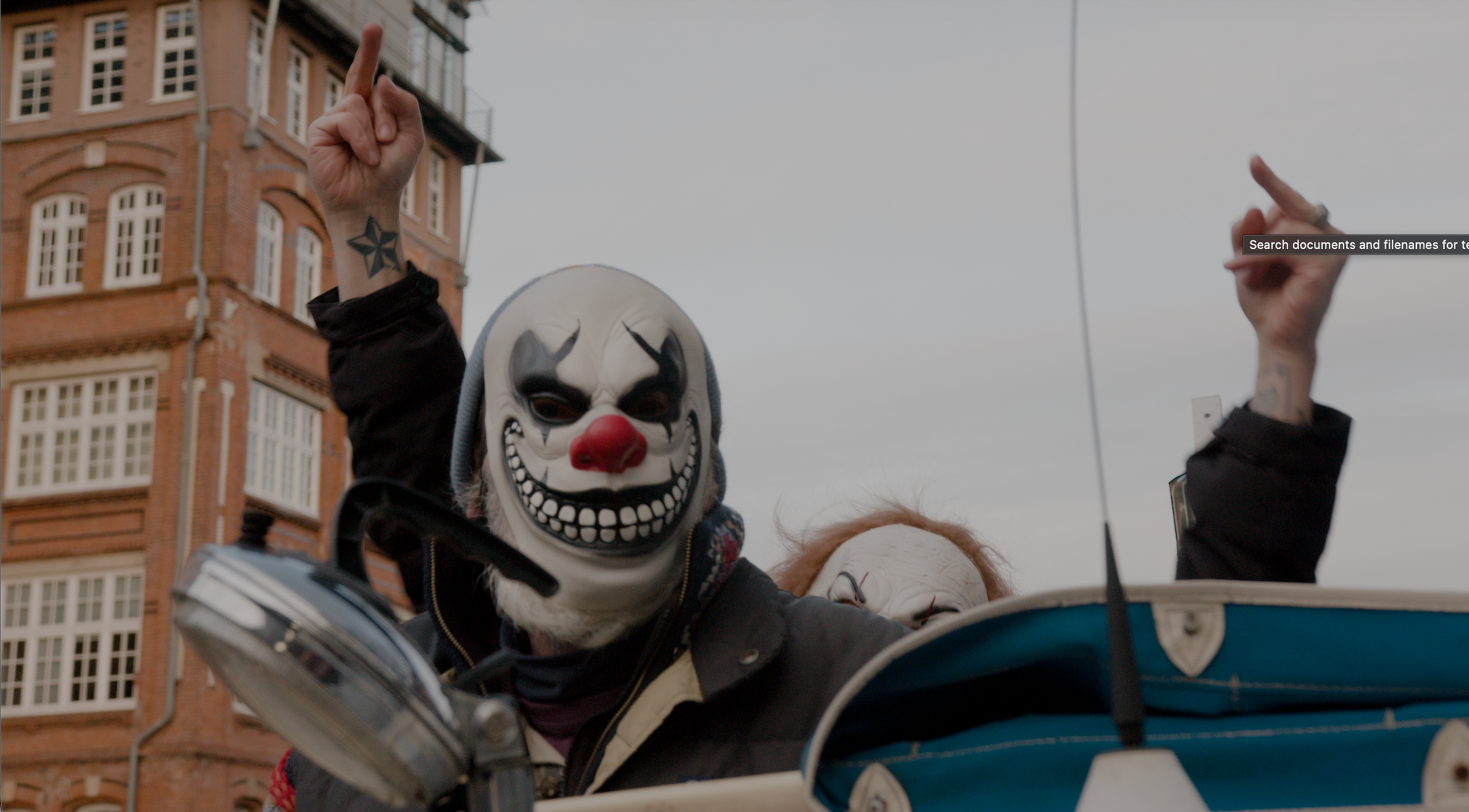
The point of departure of the collaborative film is a recording of graffiti decipherable from a bridge: „Wer andere übern Haufen kehrt, wird stolpern.“ (“Those who knock others down will stumble.”) The shot conceived by Fetish Terranova calls to mind the possibility—brought into being by jettisoning —of being haunted by the jettisoned. Its actualization is initiated by the confiscation of Horst Antes’s Figur 1000 from a park on Berlin’s Yorckstraße. Daniel Hopp and an acquaintance from a 12-step program liberate the sculpture from the traditional enclosure for aberrations in a counter-directional afterlife: the resurrection of art in the base. “I must’ve died somehow, surely this is heaven” one hears Max’s recitation of his own poem soar within the seized medium. From this vantage point, the Mustang-driving poet traverses the surroundings of the Drob Inn at will. Roxana takes the liberty to trample on John's. Death becomes an object of contention for Alexey. Daniel transforms the debasement of monsters into a surge of resistance in August-Bebel-Park. Accompanied by the words of Brazilian abolitionist Antônio de Castro Alves, William revives the sculpture through a ritual of unveiling. The out-of-control Figur 1000, who consecrates a desperado into a cleric experiencing the mediation of art before this revenant of art strays into a lair frequented by the homeless, is not without reason emplaced by the police portrayed by Christoph and Herty in front of a cultural authority for its reintegration into the community of good taste at the end. After all, the passage from the street to art, paved by Fictional Healing, conjures up a reproduction of art that deprives the ground of an appearance, produced on the backs of others.
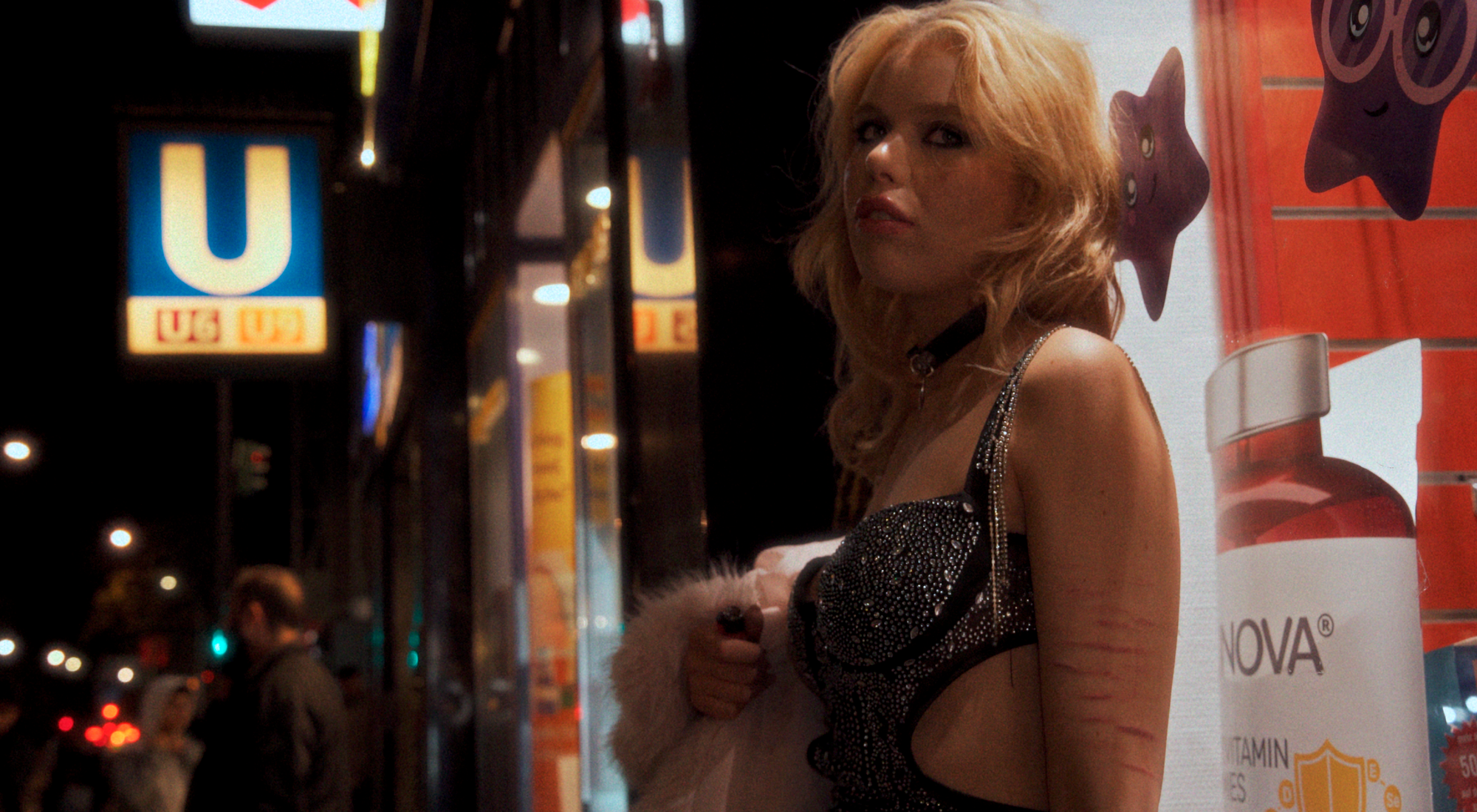
Vido Stills Courtesy: Daniel Hopp & Ania Maria Wanda
Daniel Hopp’s practice can be conceived as such an infiltration into art. The street is not conciliatorily brought to light through the semblance of art. The semblance of art emerges from an intransigent rebirth on the street. The artist, acquainted with both the elevated and the rejected exteriority, lets one dissolve into the other. The transitorily unfolding de-limitation of the lower and the upper displaces art into a trajectory that points beyond itself. The sacrificial excess experienced in the exhibition renders apparent, on the return toward the exit, the deployment of AI-generated works along the installation’s fences: The first pinning of the pre-appearance at Leopoldplatz by Ahmad, Babarossa, Saskia, and Toni – in which Herby, too, immortalized with a brass set into the floor of the Kunsthaus, may shine on.
//
Nils Fock is a PhD candidate at the HFBK Hamburg and the Institute for Social Research under the supervision of Juliane Rebentisch and Christoph Menke with the thesis “Abject Nature. A theory of contemporary art after Georges Bataille.”