
So here we are, in Charlois, a historic village that the city has long since absorbed, its streets are hemmed in by port infrastructure and shipping containers. We are staying in a small, preserved house, maintained by an association of people born in the area, many of whom still live in the neighborhood and work to conserve its heritage. Three older working-class men sit with us quietly, observing, as we wait for Philipp Schwalb. Upon arrival, he immediately talks us through the paintings he has installed among the objects of the house: Delft blue, fragments of domestic history, and small artifacts that carry the weight of centuries.
Schwalb’s work is deeply referential and structured, drawing on his ongoing engagement with Aby Warburg’s lifework, the Mnemosyne Bilderatlas. In Charlois, he produces thirteen allegorical paintings, rendered in Delft blue, each corresponding to one of the thirteen books written by Octavia Butler, tracing their speculative, dystopian, and prophetic narratives. Red and turquoise ripple through the compositions, which beautifully lose themselves in the encompassing blue, announcing different frequencies and resonances across the series. On the backs of each canvas, Schwalb inscribes footnotes, references, and mirrored meta-texts; a quiet archive and companion to the visual worlds depicted on the front, signalling both process and reflection. These inscriptions act as a secondary plane, commentary looming behind the images, subliming each painting into a site of layered knowledge, a node in a network connecting science fiction, historical trade routes, and visual poetics.
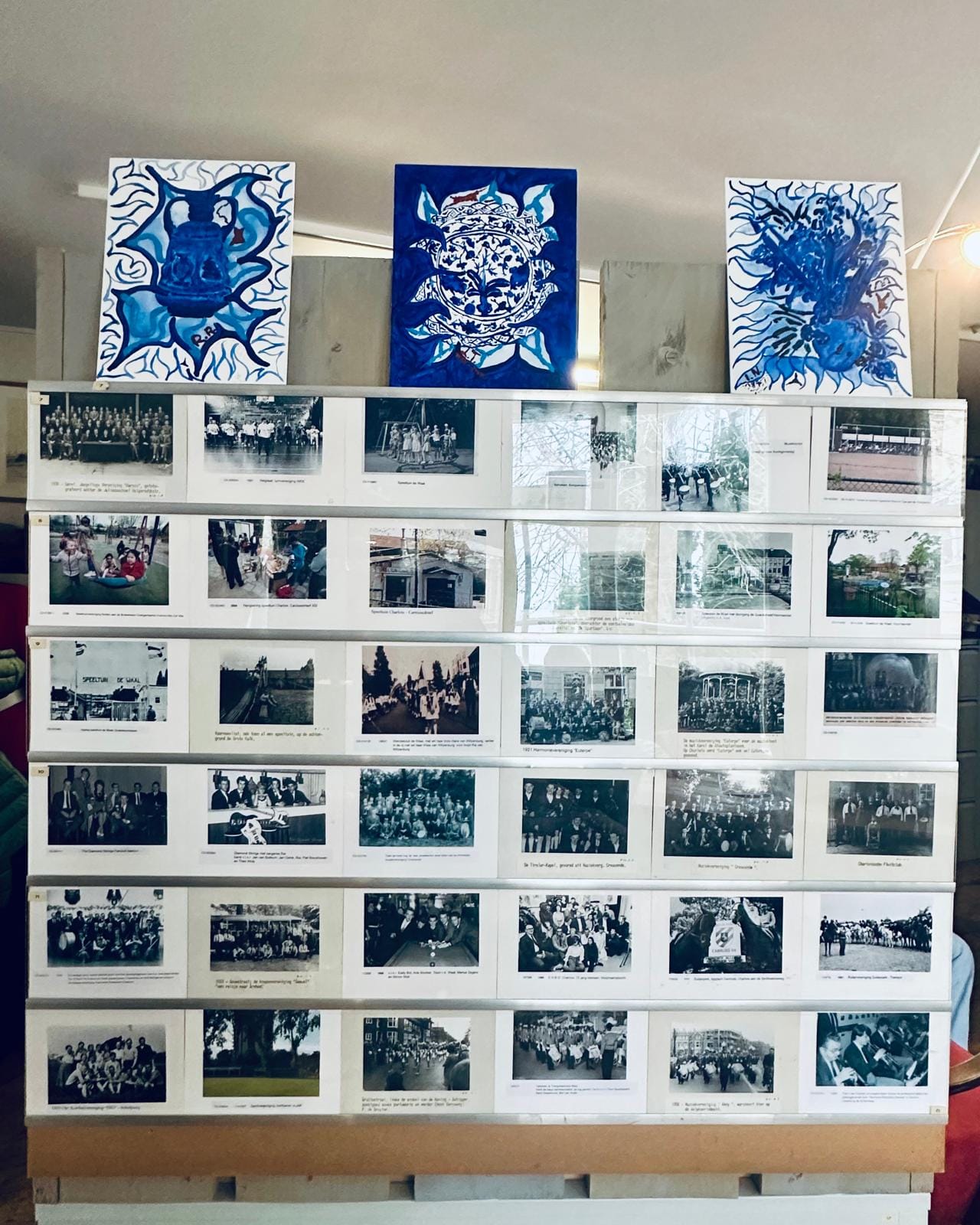
Philipp Schwalb, installation view at Historisch Charlois.
Where does “Delft blue” come from? It is a derivative of cobalt. Where does cobalt come from? The Black Forest, just like Schwalb. Much of the timber that built the Netherlands, once a major maritime imperial power, also came from the Black Forest. In this compact interior, the local and the global collapse into one another. Rotterdam appears not only as a city but as a bottleneck of trade, an intermediary of flows, its history of destruction and reconstruction suspended just beneath the surface. Rotterdam was pummeled by bombs in 1940, and again in 1944. After the war, the city was rebuilt in modernist style, guided by master-plan thinking, yet always remained attentive to local specificity and practical solutions.
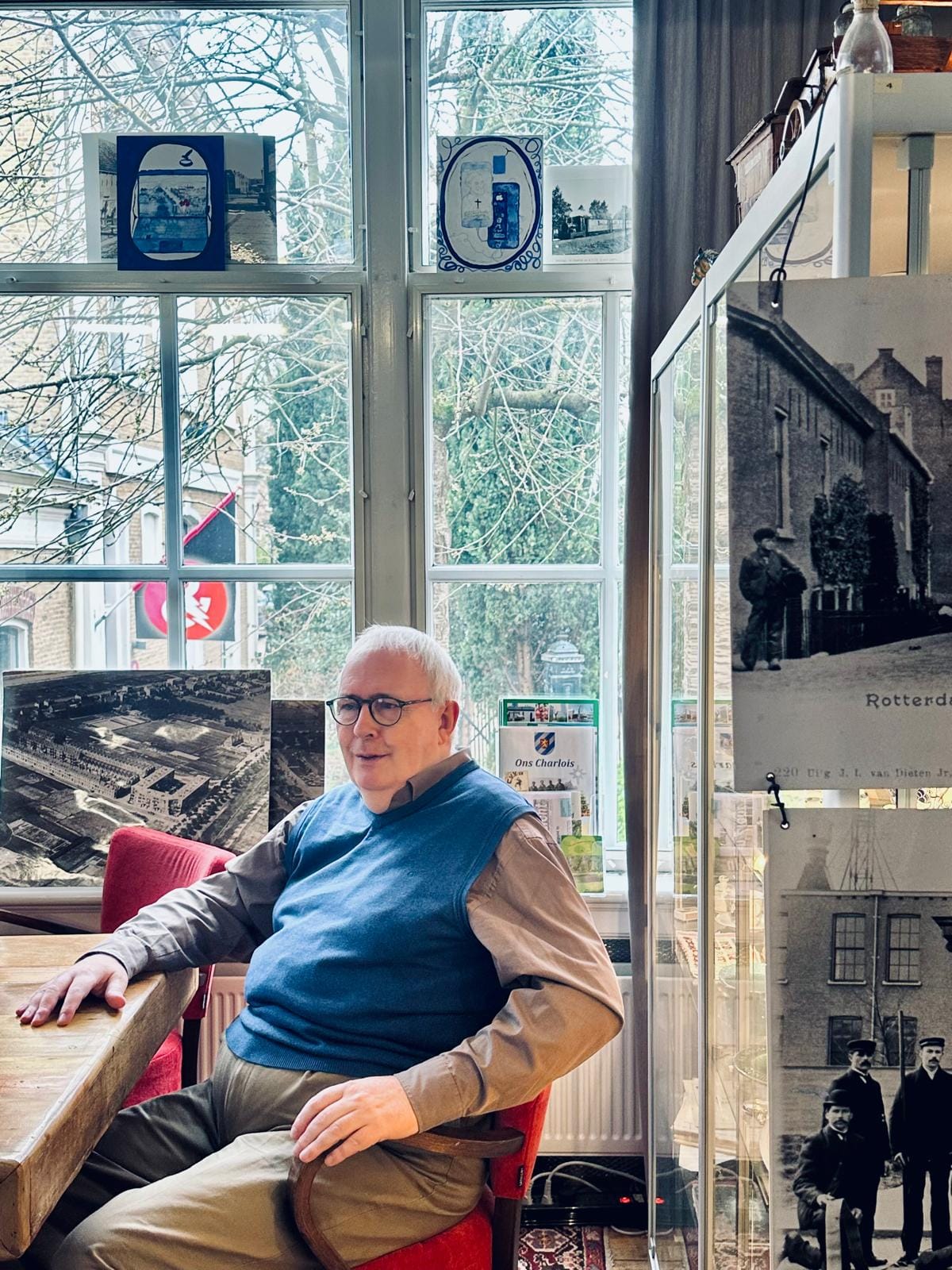
Philipp Schwalb, installation view at Historisch Charlois.
The allegorical density of Schwalb’s paintings resonates with the broader, distributed landscape of Charlois where Het Zuid Manifest: Carola Loves Carlos! unfolds. Over seventeen locations—from shops and cafés to a theme park and other historic sites—this free contemporary art festival, now in its second iteration, situates artworks within the everyday architecture of the neighborhood, creating encounters between art and local life. Curated by Maziar Afrassiabi, the festival extends across local and international collaborations, embedding both process and site-specificity into the dramaturgy of Rotterdam Art Week. Schwalb’s references to Butler and Warburg mirror the festival’s layered approach. An attentive visitor would need more than three days for a visit to do justice to the histories, texts, and social infrastructures that are part of the event, transforming Charlois itself into a networked exhibition, a space where material, memory, and relationality converge.
A Tale of a Tub, in Delfshaven lies at another edge of the city. The Justus van Effencomplex, where the institution sits, is a superb example of modernist architecture: rational and grid-like, yet socially attentive, encompassing elevated streets, expressionist brickwork, and a former bathhouse and washhouse, it is now home for contemporary art. Designed by Michiel Brinkman (1873–1925) under the influence of Theosophical principles, the estate was conceived to support communal circulation and social cohesion. Katrina Palmer’s artistic intervention engages the erstwhile laundromat at the heart of the complex. A postcard in the exhibition shows three women at work in the laundry room. In the exhibition, three chairs echo their positions in the same corner, linking past and present. Palmer wrote the press release herself, noting in its text “I want to spend the duration of the show removing their front wall.”
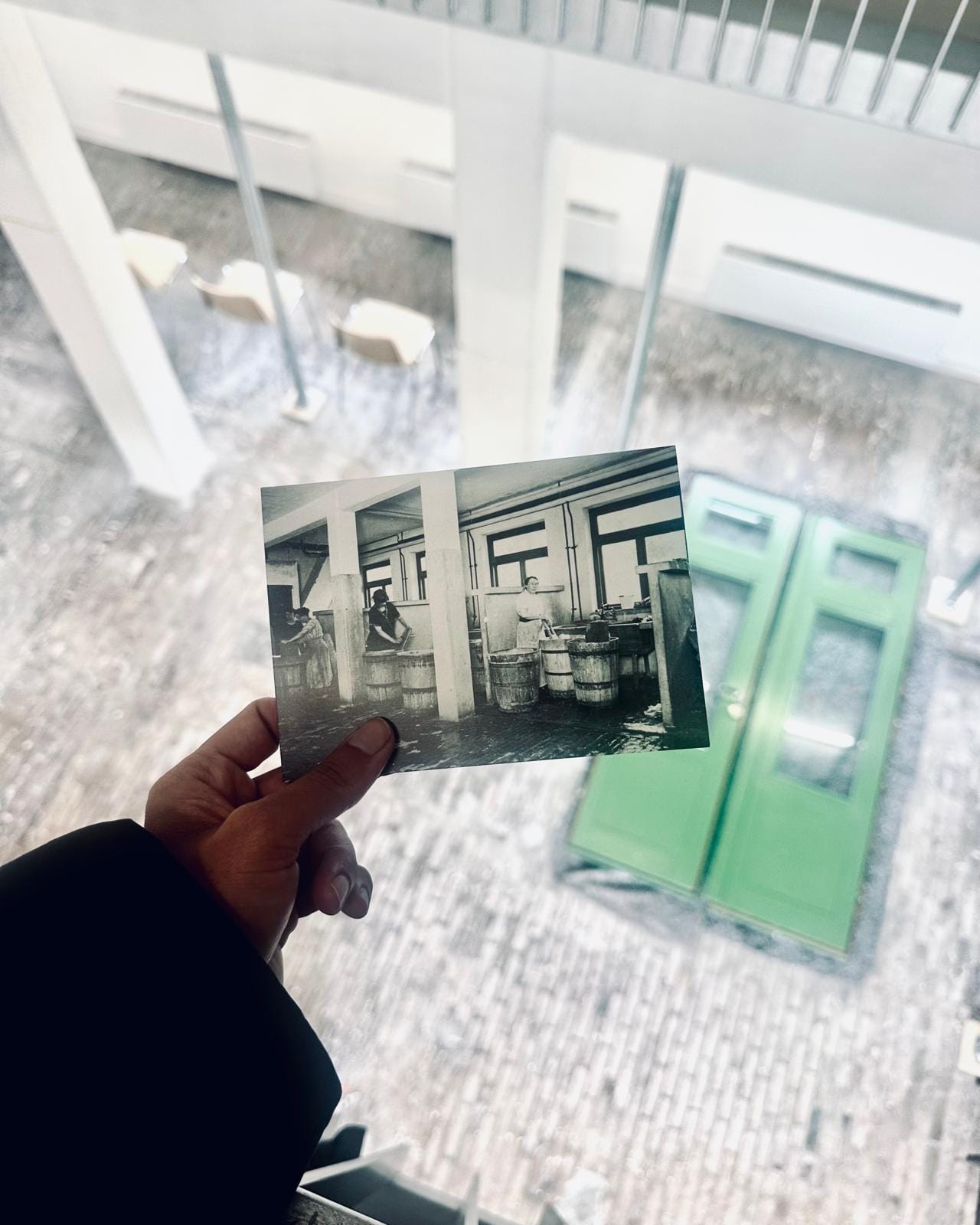
Katrina Palmer, installation view at A Tale of a Tub. Photo by MILP.
Palmer’s demolition proposal—absurd, expensive (and therefore impossible)—is less a practical plan than a gesture, one that draws attention to the wall’s existence and its social, symbolic, and architectural functions. The show integrates a script titled Notes Towards a Paranoid Construction which sits waiting to be read on the tables in the building’s mezzanine. In these interventions, ethical attention operates at a small scale, negotiating the tensions of occupying a space, and suggesting abstraction without aggression. Palmer, through the distributed work, foregrounds the porous but socially significant relations between art, architecture, and real world residents of the area.
Kunstinstituut Melly aspires to the same level of engagement, but uses totally different means. Arriving at the space, one notes that it does not look like a museum. The building is adaptive, semi-permiable, attentive to process. Many works resist clear notions of authoriality; they are collaborative, relational, sometimes anonymous. The work recalls ruangrupa’s projects in Kassel (i.e., collective forms foregrounding participation) but Melly’s focus is narrower, both socially and institutionally specific. A narrative thread can be found in the show with Ni(e)k van der Meulen’s comic, Man Down, which exemplifies the quiet rigor of process. In the work, trans man reflects on the limits and privileges of “passing” as male. The narrative is simple, almost understated, yet its implications linger. The work is a small, precise gesture that functions as a form of literary care.
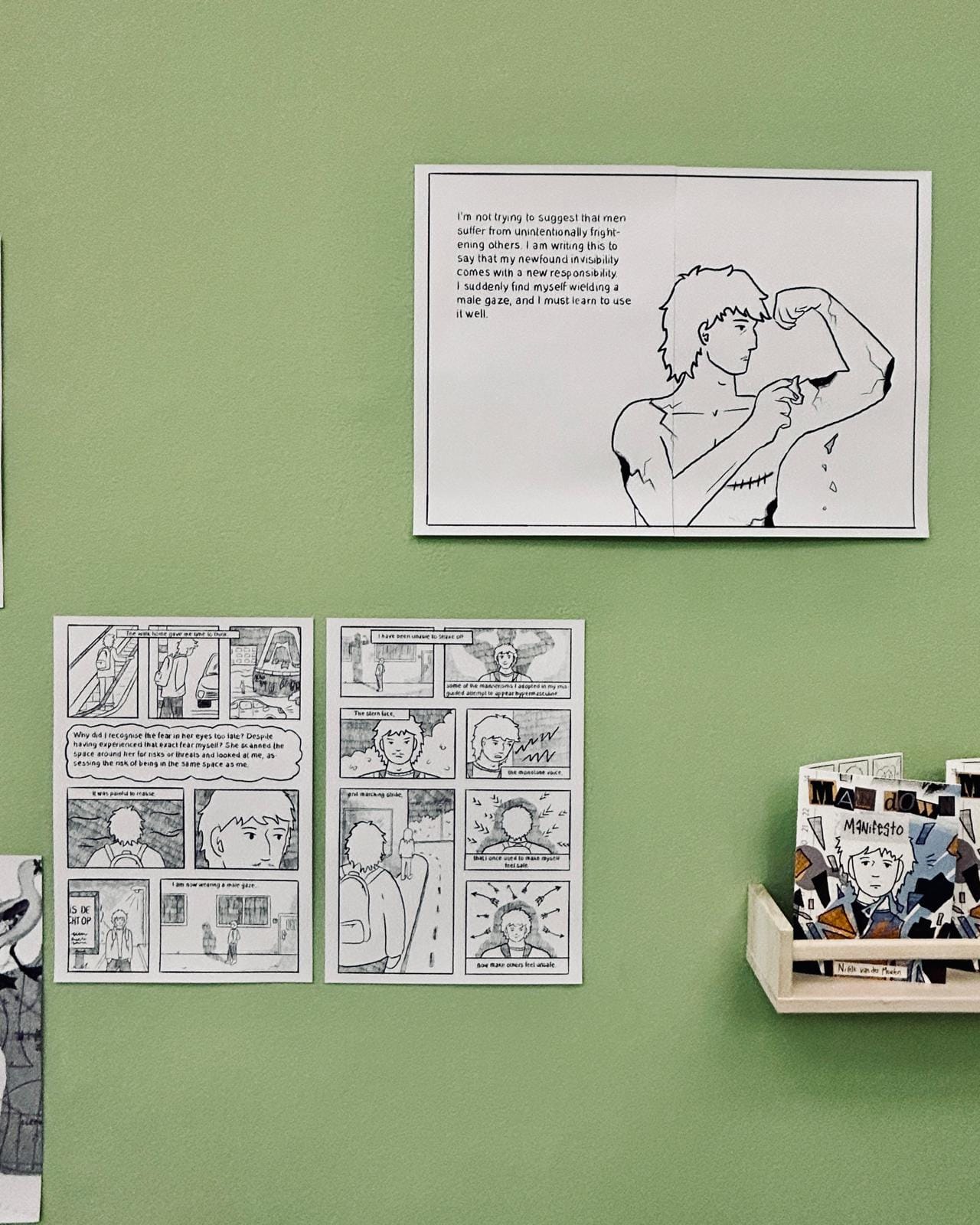
Installation view, Kunstinstituut Melly. Photo by MILP.
Our visit took place on the last day of Donna Kukama’s “I Breathe, You Breathe”, spanning twenty years of interdisciplinary work: performance, video, sound, painting, drawing, sculpture. Breathing, for Kukama, is central as a grammar for storytelling, memory, and historical consciousness. Kukama displaces language, however, in favor of gestural knowledge, invoking ancestral practices. Sculptures in clay, copper, and steel become miniature monuments. The exhibition resists the imposition of linearity: rumors, poetry, gestures, and traces converge, echoing the contradictions and pluralities of history. Abstract wall drawings, initially indecipherable, gradually reveal residues of lived experience. Performance documentation situates the status of the body within modernist housing estates, asserting presence against industrial scale, embodiment as testimony.
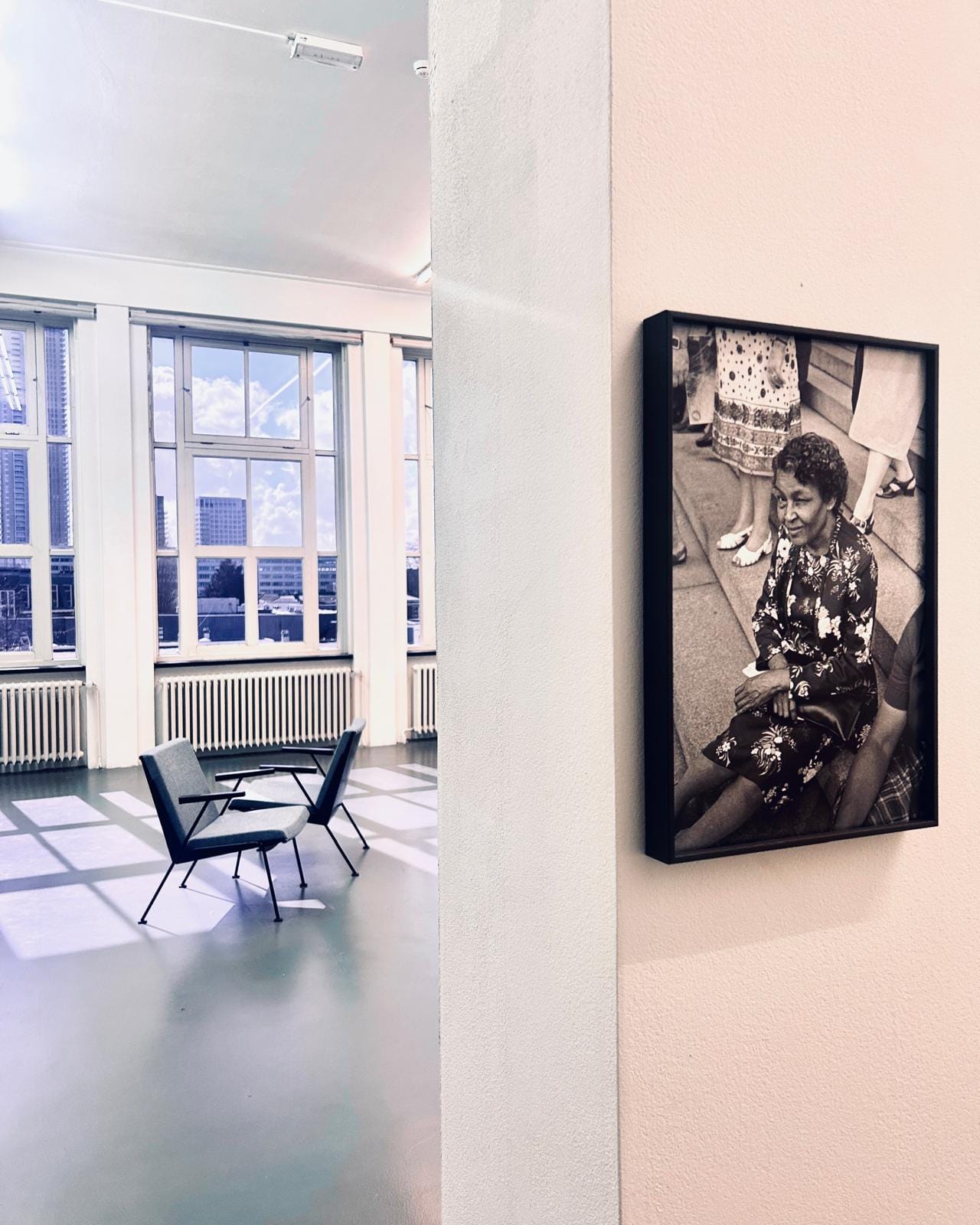
Installation view, Kunstinstituut Melly. Photo by MILP.
The cherry on the top of this visual treat, on the last floor, is the unconventional retrospective of Marilyn Nance’s archival practice. It is on view until May 13th. Nance’s retrospective exemplifies historical insistence in the absence of overt thematizing. Across decades, she has documented street life, church gatherings, demonstrations, domestic scenes, and dances. Curated to include Ali Santana’s sonic interventions, Nance’s digital treasure trove—soulsista.com, active since 1995—prefigures contemporary online archival practices. The works stress the necessity of documenting one’s own history on one’s own terms. The softness of Nance’s gaze collides with the hard edges of the skyscrapers of Rotterdam through Melly’s windows, forming an intense yet tender dialogue.
Nearby, Slash Gallery hosts one of Rotterdam Art Week’s central curatorial axes: Interface, a group exhibition exploring technology, mediation, and human relations as well as Pleun Gremmen’s lexicon of extremist ideology. The show’s deliberately incomplete setup—three screens showing different, partially inactive content—encourages viewers to navigate the riptides of reading, watching, and listening simultaneously. Among the works, V.I.B.E. Culture’s voting booths reveal algorithmic influence on ideology and behavior; Yi Fei Chen’s inflatable stool, Excuse Me materializes social and emotional forms of mediation; Nino Basilashvili’s projections explore utopian potentials of digital connection. Together, these works trace a spectrum from dystopia to possibility, anatomizing the ways in which technology shapes both connection and disconnection.
Rotterdam Art Week originated as an extension of the established Art Rotterdam fair, conceived as a way to connect a fragmented local art scene across the city’s neighborhoods, galleries, and open studios. Its structure prioritizes inclusivity and visibility, allowing both small and established institutions to participate, while the independent curatorial program weaves thematic threads across the dispersed network it encompasses. The parcours logic of the Week reflects a city defined by scale and specificity: each venue, from peripheral sites to central galleries, contributes a node in a network attentive to process, context, and encounter. The Week’s design emphasizes movement, exploration, and the productive tensions between local particularities and metropolitan cohesion.
The Rotterdam Photo Festival sits elsewhere in the city, forming a contrast. In a rain-soaked container lot, exhibitions purport to present photojournalism, yet often they seem naïve, performative, or self-consciously empathetic. The containers themselves carry heavy semiotic weight: sites of migration, temporary housing, smuggling, and of course the relentless logic of capital exchange. The festival’s self-conscious attempt at openness sometimes reads as exploitation. One is reminded how context shapes perception: the same photographs might resonate differently in a white cube, a social center, or a port container.
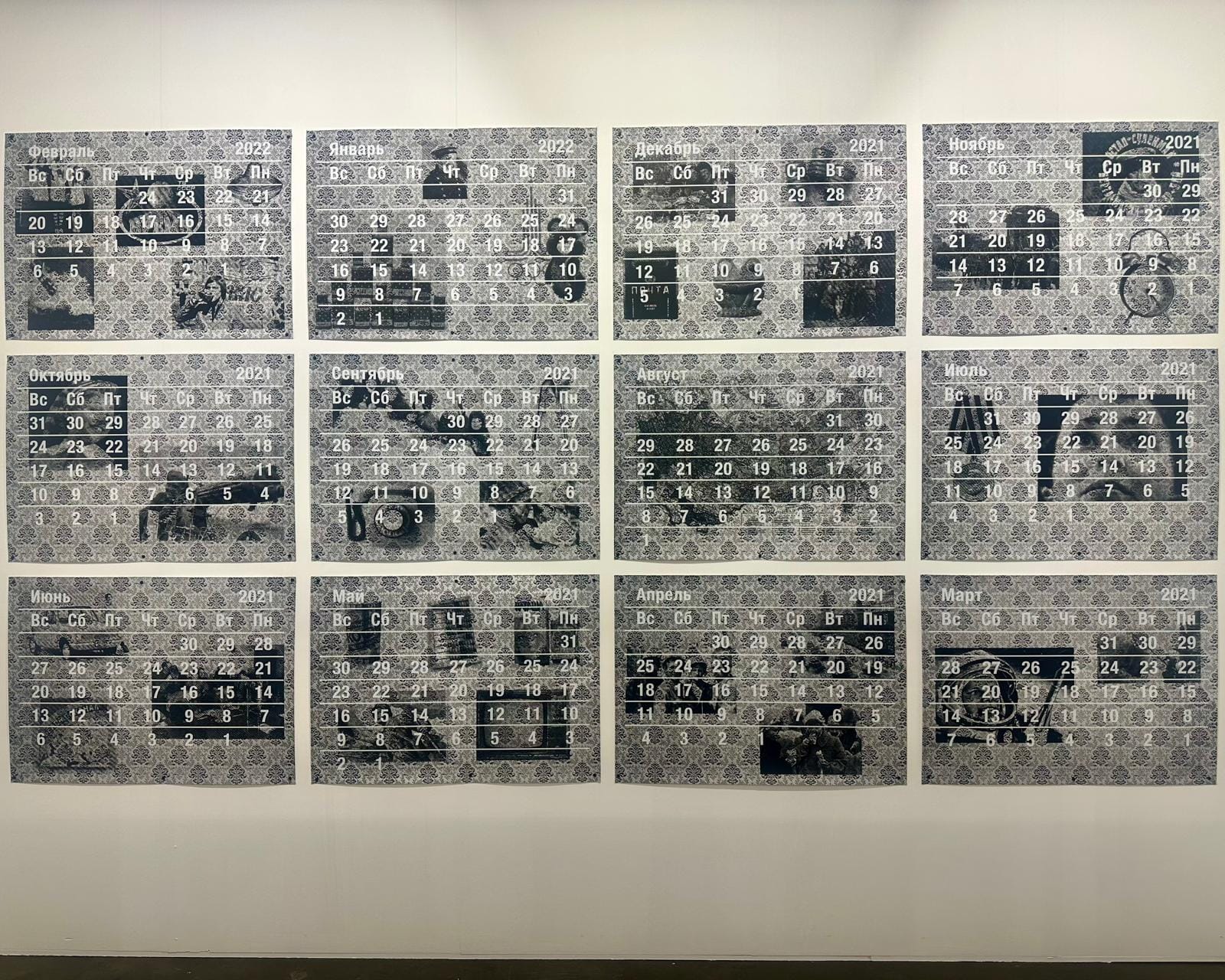
Katja Pilipenko, Do You Believe in Vanga? (2026), Galerie Melike Bilir at Art Rotterdam. Photo by MILP.
This point brings me back to the meticulous attention to trace and presence in Donna Kukama’s works. Early impressions—confusion, abstraction intersecting with performative activism—yield to comprehension: memory, gesture, and presence interlace. Microphones and speakers, repurposed as talismans of memory, become fossils, remnants rather than instruments of precision.
At Art Rotterdam, the Hamburg gallery Melike Bilir presents Katja Pilipenko’s Do You Believe in Vanga? (2026), a formally rigorous, historically concerned intervention. Drawing on the figure of Baba Vanga, the Soviet-era clairvoyant, Pilipenko investigates the circulation of knowledge and the ethical, social, and historical stakes of truth-telling. Through surrealistic forms, partisan and anti-war poetry, sculpture, drawing, and print, she materializes invisibility, conscientious refusal, and desertion. Born in 1989 at the threshold of the Soviet collapse and the ragged transition to klepto-capitalism, Pilipenko embodies a liminal perspective, rendering historical and conceptual tensions materially present.
Rather like the complexities generated at Rotterdam Photo Festival, the context of Art Rotterdam informs the reading of this work. While the fair relies on the labor, fees, and participation of international galleries, the economic and critical recognition for local artists and institutions remains uneven. Pilipenko’s work—ethically precise, historically anchored, and materially dense—stands in deliberate contrast to the market-driven logic of the fair, revealing the gaps between local artistic production and the globalized circulation of capital and attention. Against this background, the work does more than register historical memory: it enacts a quiet form of resistance, asserting the value of specificity, conscientious practice, and critical reflection in spaces shaped by uneven modes of exchange.
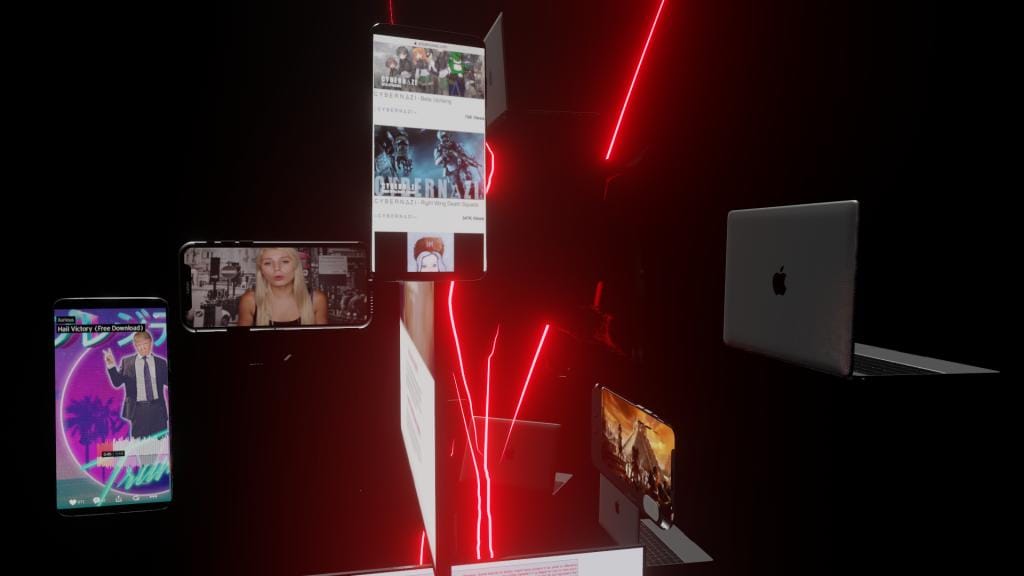
Pleun Gremmen, works from the portfolio.
Outside on the streets, Rotterdam’s weather shifts quickly: drizzle, sun, gusts of wind come off the Maas. These transitions are mirrored in the exhibitions: spaces are responsive, contingent, attentive to temporality. Rotterdam Art Week has proven surprisingly vast and logistically challenging. Over sixty locations, ranging from major institutions to pop-up galleries and artist-run spaces, its dimensions are vast—including a concert at a church turned into ateliers for young artists, an afterparty, guided tours. These para-events enhance the broader experience, but soon you realize that attending everything is kind of impossible.
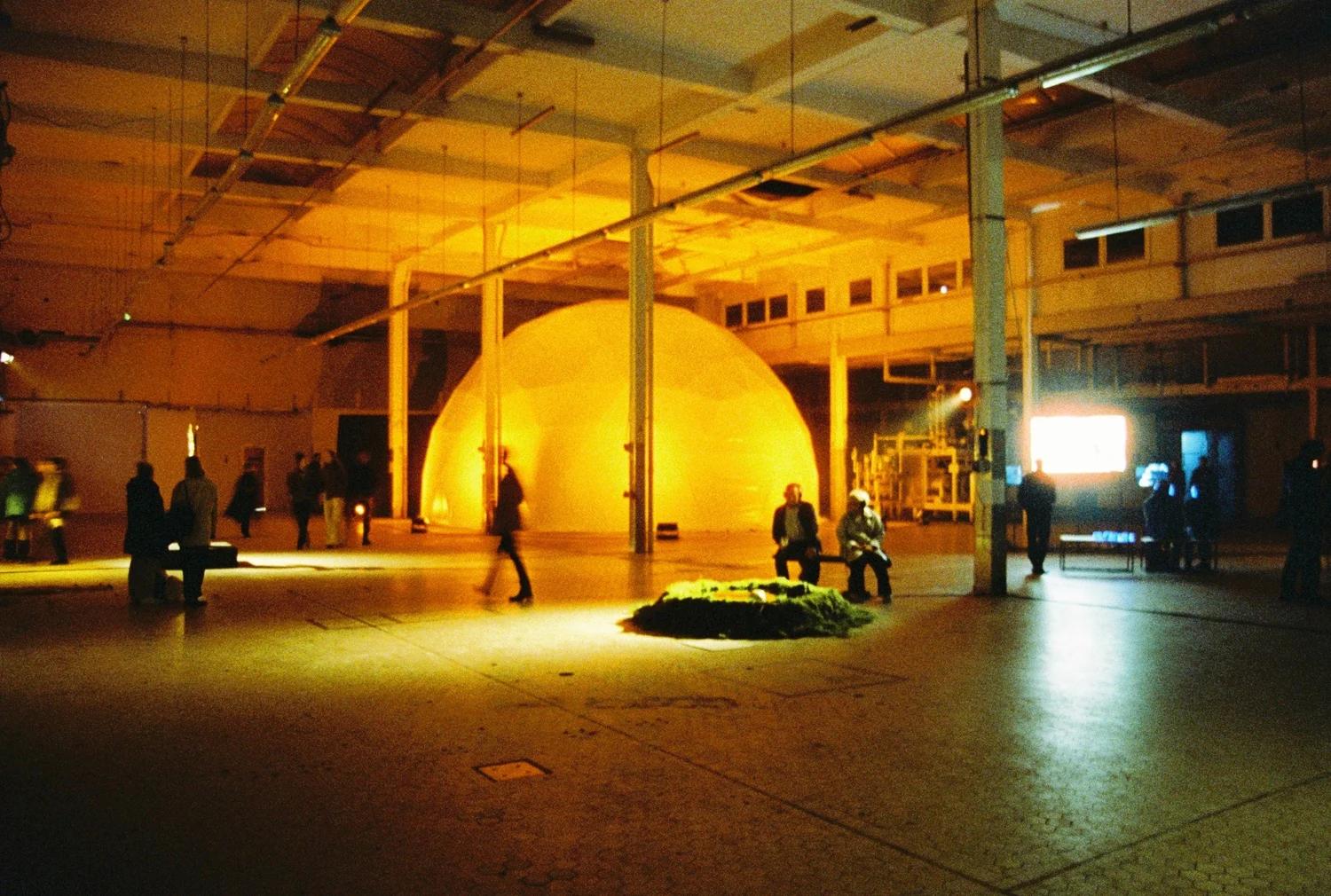
Installation view, New Current.
New Current, curated by the initiators of the Rotterdam Art Week, Yvonne de Jong and Sophie de Vos, functions as a sort of central hub. Its thematic sweep—exploring “connections” between humans in a rapidly changing world—is broad, inclusive, and mediatory, if not always sharply critical. It establishes cohesion in a city whose art scene is otherwise fragmented and, by comparison with Berlin or Amsterdam, relatively conservative. The Week clearly asks a lot of those who attend, but its scale also offers the allure of hidden gems; individual visitors are rewarded according to their efforts; this is a blessing and a curse. To each according to their efforts may not always result in an experience of art according to one’s needs.
//
Image Cover
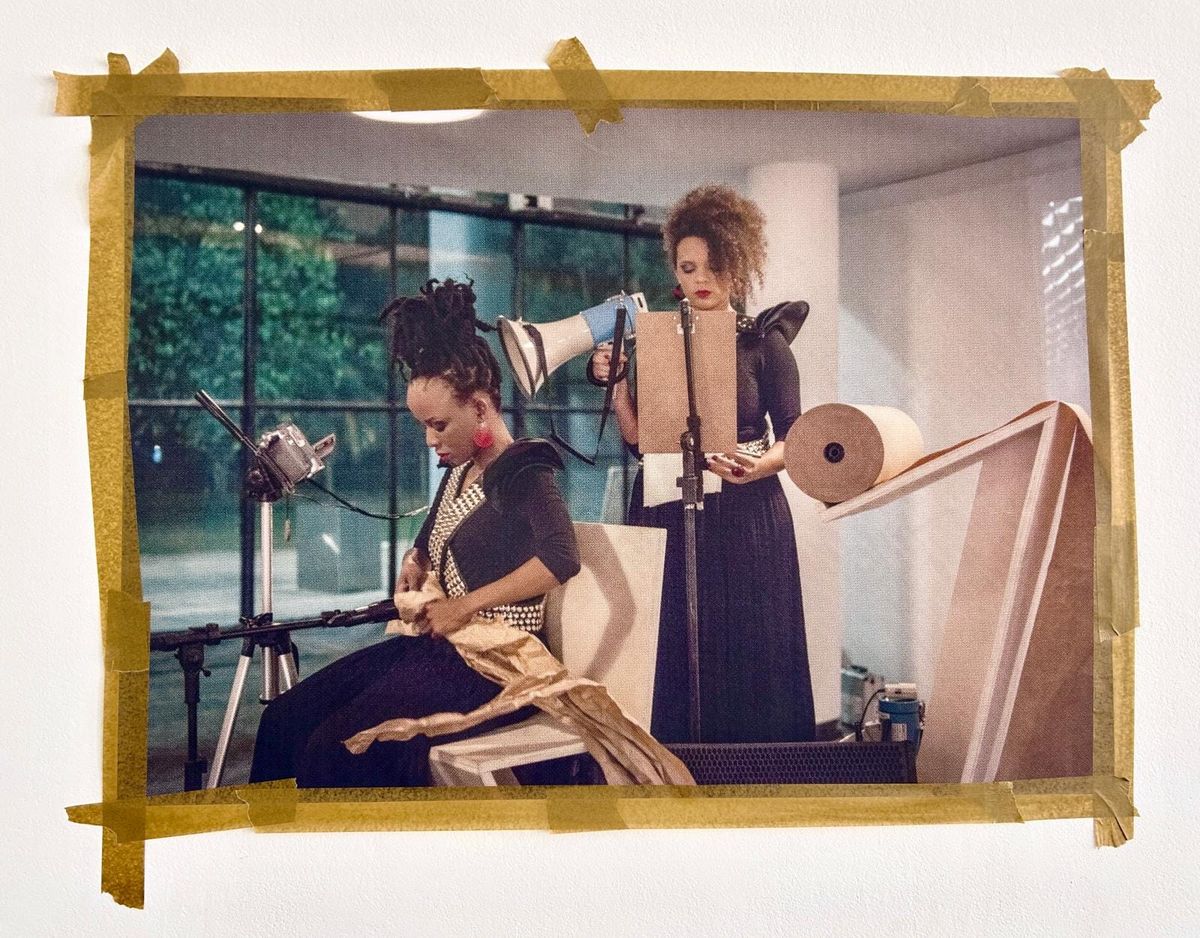
Donna Kukama, I Breathe, You Breathe, installation view at Kunstinstituut Melly. Photo by MILP.
María Inés Plaza Lazo is editor-at-large, publisher and founder of Arts of the Working Class.