
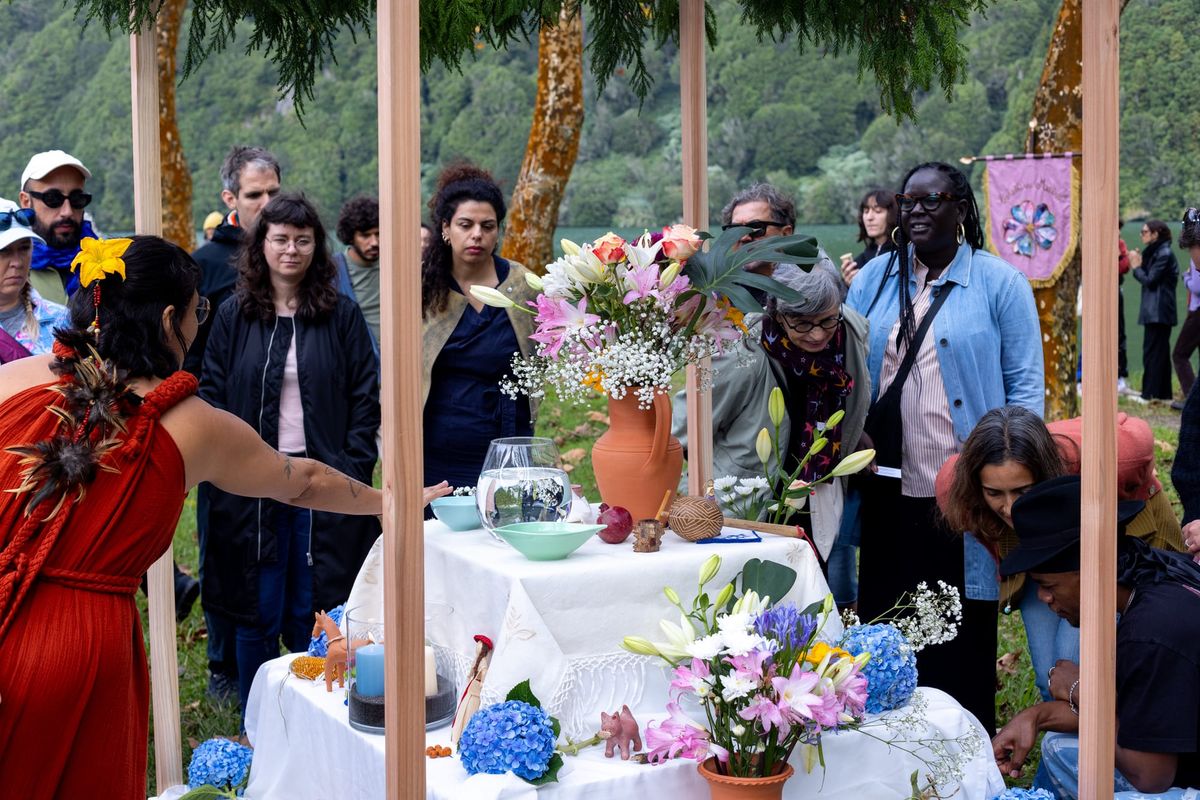
To think through abundance is an exercise to which we are not trained, in the course of racial capitalism's scarcity obstacle race. Nevertheless, I found, on the island of San Miguel in the Azores archipelago, modes of thinking and operating that deceive the very gaze and language that project scarcity on reality and its modes of production. The occasion was the three-day symposium organized in the frame of the Walk&Talk Biennial, this year under the title “Gestos de Abundância” (Gestures of Abundance), an invitation to engage with the island as an ecology of thought from within which to speak about locality and globality. A method of thinking, feeling, and sensing, in addition to being a geography.
I landed in Ponta Delgada, San Miguel’s capital, on the night of November 6, under a sky that was pitch dark but illuminated by a waning moon in Taurus. It was late, and the city was quiet. I paid attention to the sound of the waves, which greeted me back and made me feel enveloped in an aquatic hug that gently rocked me to sleep and left me energized for the next day. I felt San Miguel was nothing but isolated in the Atlantic Ocean.
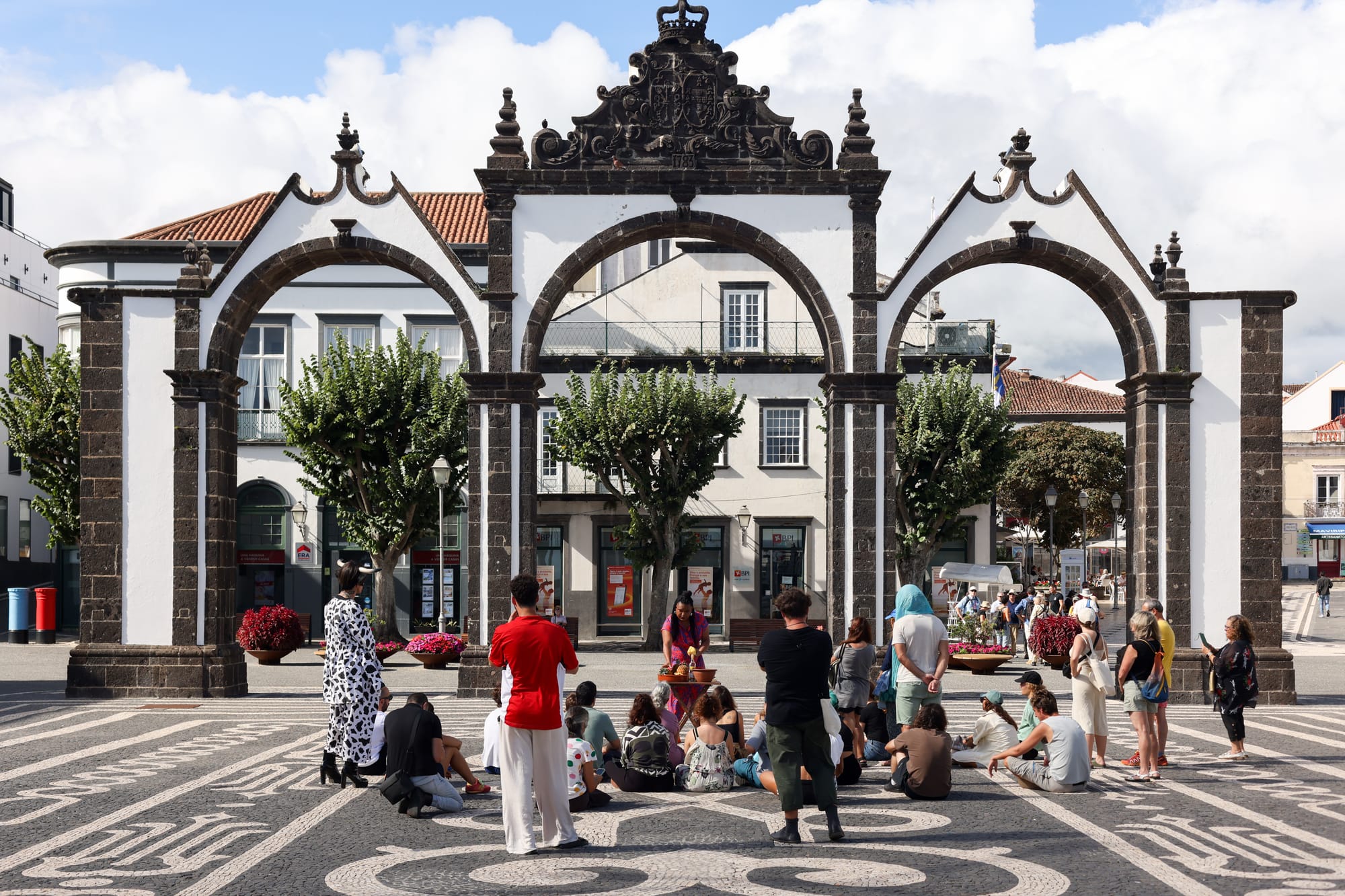
Fig.1
The symposium, hosted in various venues in the city and mostly Casa da Bienal, brought together a wealth of practitioners under the methodology of archipelagic thinking to subvert colonial epistemes, land, and spiritual extraction. But also to seed imaginations to counter a climate crisis accelerated by land exploitation, multiple refugee crises, and impoverishment and starvation of entire indigenous populations due to the greed of centuries of western militarization and imperialism, the results of which now condense in a moment of acute polycrisis and upsurge of forms of resistance worldwide.
The first day of the symposium opened with Candice Fujikane's "Mapping Abundance", a lecture that reframed abundance not as human accumulation but as elemental entanglement. Fujikane, a scholar and activist from Hawaii, drew on Kanaka Maoli perspectives to show how nature resets itself against military corporate capitalism. Facing ecocide, rising sea levels, and anthropogenic wildfires, Hawaii's indigenous communities read these disasters as opportunities for the elements to reclaim their centrality, an altered ecosystem that humans must learn to survive within, not dominate.
Teresa Castro followed with a lecture-performance on orcein, a purple dye extracted from lichen and traded as a colonial commodity. Tracing the lichen’s precarious symbiotic mechanism, Castro called it “true communism,” positioned against the vampiric Capitalocene, what the poet Andrew Miles terms the exploitation of the “bioteriat”, returning agency to natural “resources”. Fernando García-Dory, founder of Inland, then recounted how, since 2009, his platform has challenged the city's supremacy as a site of cultural production. “Culture is the way humans produce life, and it is not peculiar to a specific environment,” he argued. By focusing on rural extinction and reviving shepherding through the Escuela de Pastores, Inland sabotages hypermobile cultural consumption and reclaims enduring, localized time.
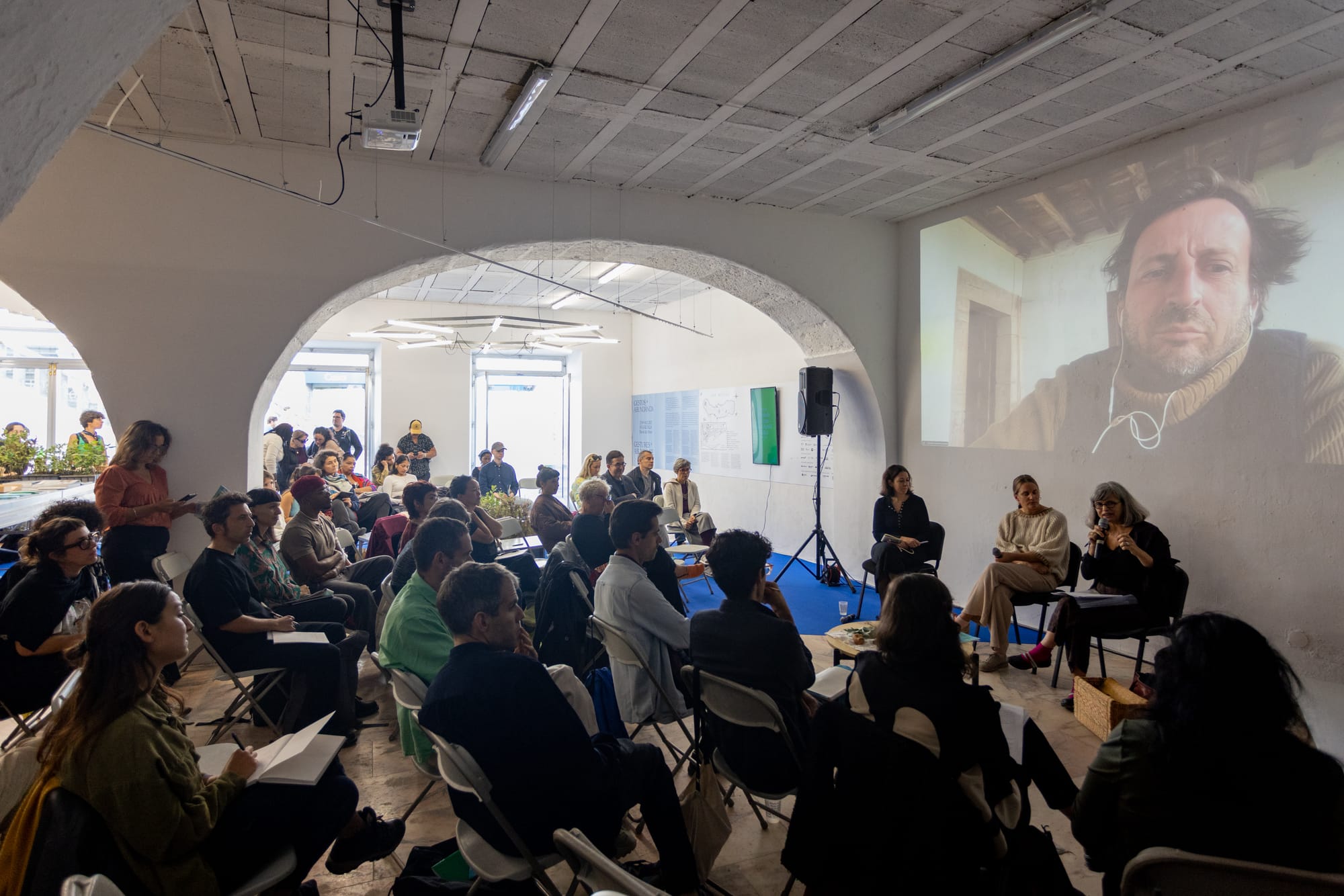
Fig.2
Over lunch at Imperador, the biennial's local canteen, Jesse James, part of the curatorial team along with Claire Shea, Fatima Bintou Rassoul Sy, and Liliana Coutinho, talked me through the underlying curatorial intention: to offer Azoreans occasions to know their history and to use this knowledge to grow a new consciousness about the present and their origins. The biennial team, mostly Azorean youth, develops professionally while restituting knowledge to their landscape’s intricate palimpsest, which is layered with extraction.
After Portuguese settlement in 1439, the Azores became a hub of transatlantic trade, a fertile outpost, providing fresh goods to prevent scurvy among long-haul sailors. The islands endured cycles of extractivist monoculture: oranges, pineapples, and now intensive livestock farming to produce cheese for mainland Portugal. Only in 2015 did liberalized air transport make the Azores a tourist destination, complicating its rural economy by rendering it tertiary. Despite these economic functions, one label persists: poverty. Wealth from such economies is unevenly distributed, making visible the expropriations endured since colonization.
The Biennial confronts these waves of exploitation by looking directly at extraction's mechanisms, and rather than succumbing to the temptation of erasure, reckoning with the liveliness of connections that these commodity cycles conceal. The exhibition, installed across “stations” throughout San Miguel, offered expanded reflections on these temporalities. At Centro Cultural da Caloura, I encountered Sofia Rocha's Câmara Quente (2024), vibrant diagrammatic drawings articulating the earth as a sentient entity. Lucy Bleach's An Infrasonorous Archipelago linked the Azores with Tasmania through drawings and sound, fictionalizing reciprocity across volcanic antipodes.
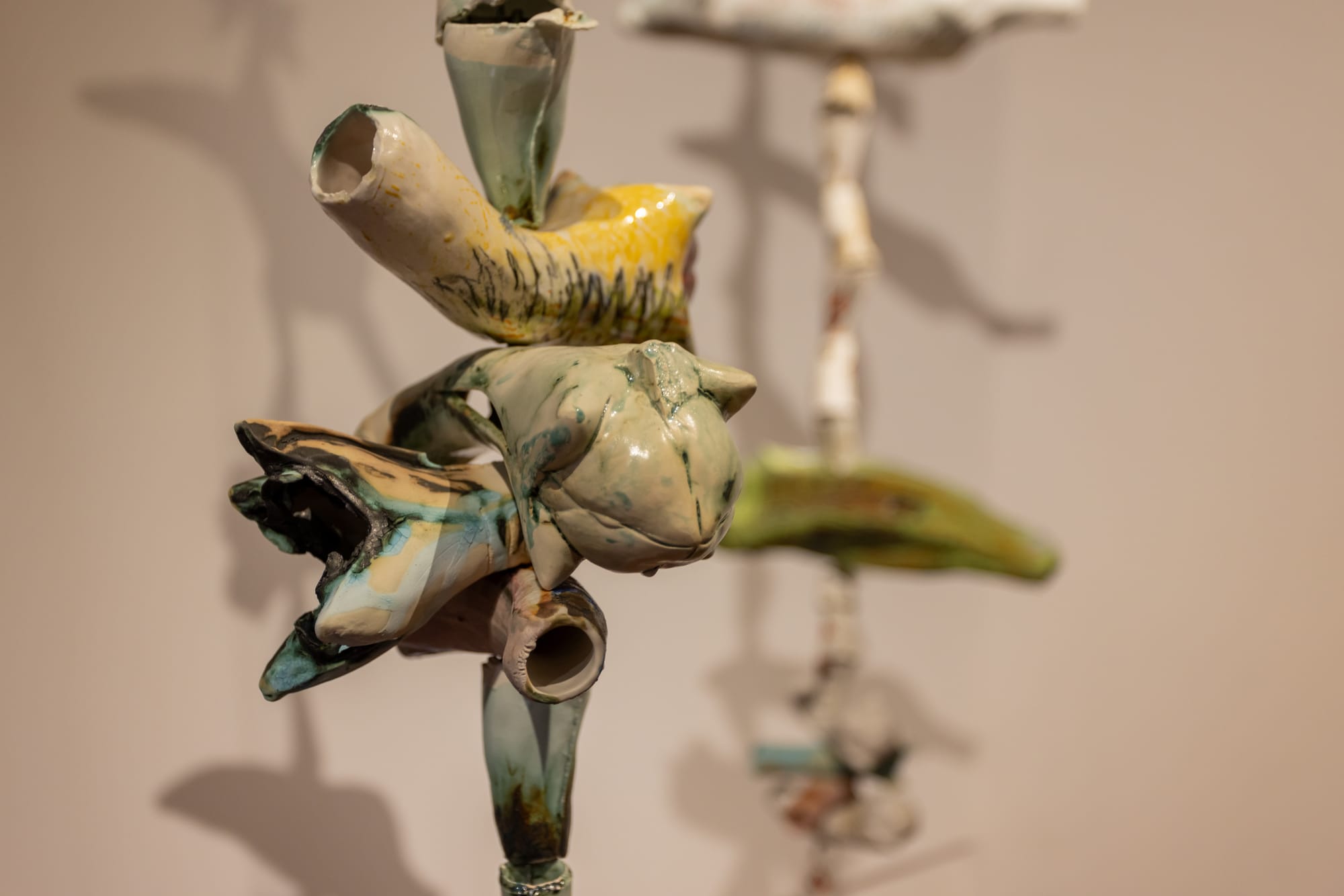
Fig.3
At Convento dos Franciscanos in Santa Cruz, formerly home to a religious community, now hosting public activities, the artists honored prosaic traditional practices in which bonds grow through proximity and time. Mirna Bamieh's Sour Cords (2024-ongoing), ceramic peppers and garlic hanging in bone-chain formations, conceived preservation of foods as a way of countering against Palestinian displacement and erasure. The following day, her fermentation workshop positioned food as a catalyst for community. Nearby, Uhura Bqueer and Soya The Cow’s Dedomestication (2025) dragged human features to reveal animality, linking decolonialism with queerness as forms of disobedience to imposed identities. In one of the rooms in the space, Jesse showed us local “presepe” craft, miniature Nativity dioramas documenting Azorean agrarian life composed from wood and shells. The craft is also typical of Naples, my own region; long-distance assonances made possible by Christian evangelization, another layer of colonial imprint that connects peoples across waters in ways I'm still learning to read.
As part of the laboratory program of the symposium, I joined Coletivo Guarda Rios and Paula Aguiar for a pedagogical session in front of Teatro Ribeiragrandense, where the Rio Grande meets the ocean. The collective’s lab with students simulated how human intervention altered aquifers and eroded riverbanks. Aguiar’s water tasting followed; waters devoid of organisms aren't necessarily beneficial to our gut biome, and each of us tastes water differently. From this liquid knowledge, profound implications about soils and their nutrients arose.
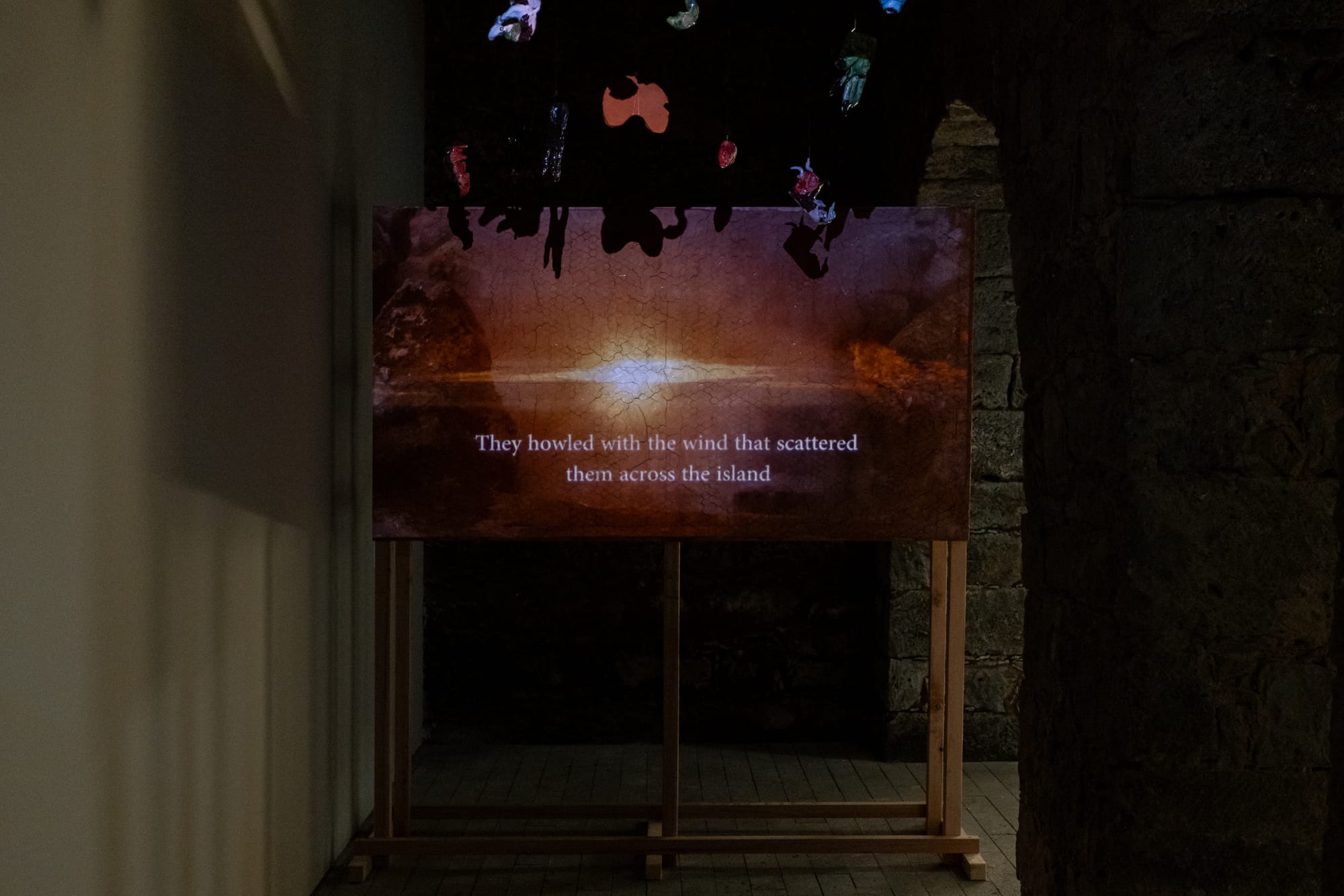
Fig.4
At dusk, I approached Centro de Artes Contemporâneas, a former alcohol and tobacco factory, where the Biennial brought together, in the humid basement, artists contending with spiritual practices as engagement with invisible and enduring forces. Walla Capelobo's The Burn the Grids Away (2025) overlapped ceramic ex-votos on a mud-and-wire screen with oracular narration concerning resistance and fugitivity, “the end of the fences.” Graça Costa Cabral's Objects of Worship I-V (2009), minimal altars, invited the contemplation of divinities and refused use value. Alice Vicentin's Arcano Místico (2025) represented Madre Margarida do Apocalipse, a cloistered Azorean nun who composed miniature archives from found materials. Vicentin freed the nun from her creative imprisonment by means of a robotic pedestal, allowing the sculpture to move. Ebun Sodipo's The Way Her Teeth Settled (2025) honored Vitoria, an enslaved transwoman whose desires were held captive, a sensorial archive offering ritualistically what was denied her in life.
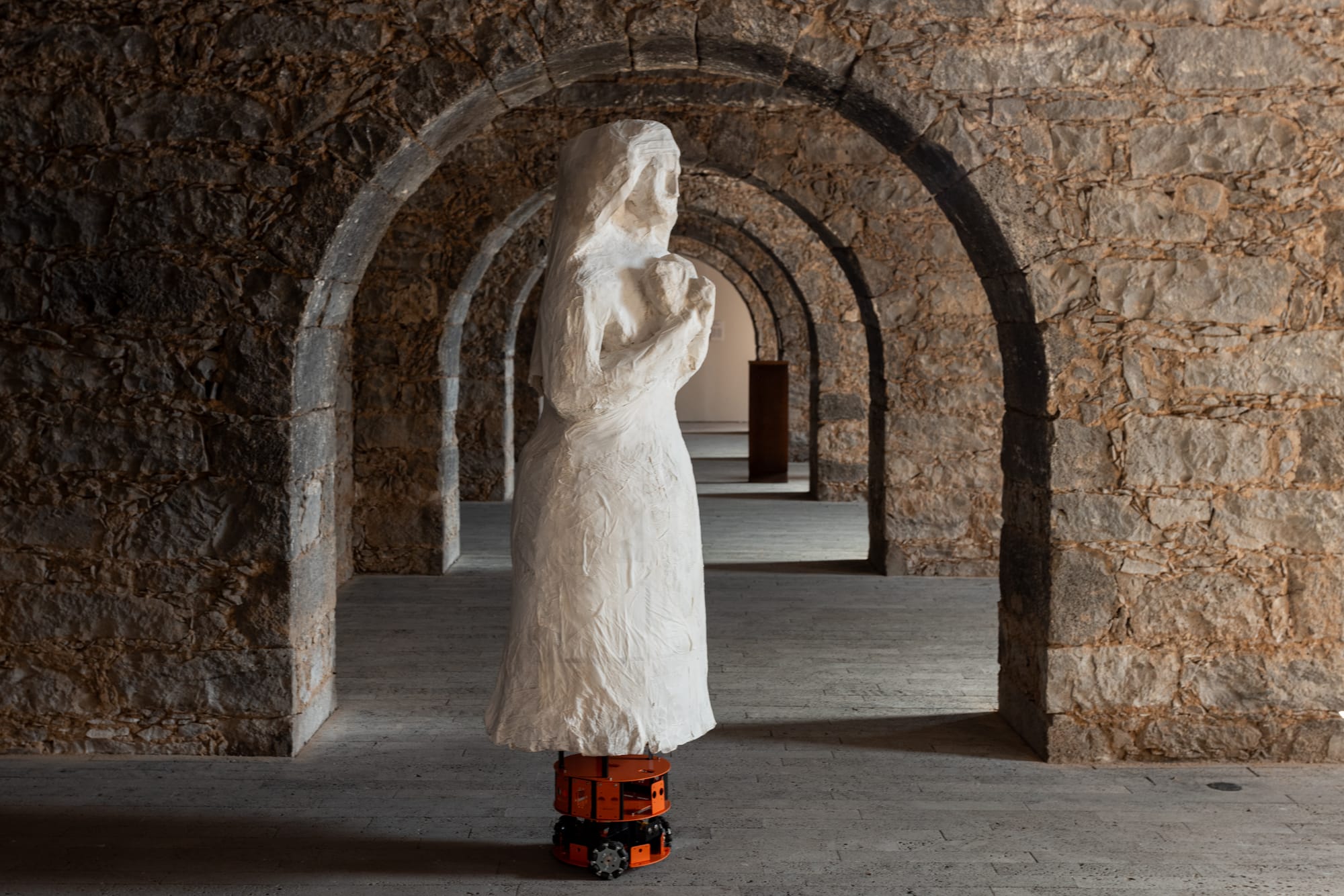
Fig.5
The next morning, before entering again the space of thinking offered by the symposium, I walked the coast early, letting humidity wet my eyelashes, threads interweaving a cosmological tapestry. Returning to Casa da Bienal, I encountered numerous homeless people. After COVID, rising rents and expanding drug use conspired to create a homelessness crisis in Ponta Delgada. The contradiction was profound: lush nature, theorized abundance, actual scarcity. Abundance remains easy in formulation, chained, as it is, to capitalist production. This tension haunted the day’s presentations: abundance, perhaps, but for whom? And at what cost?
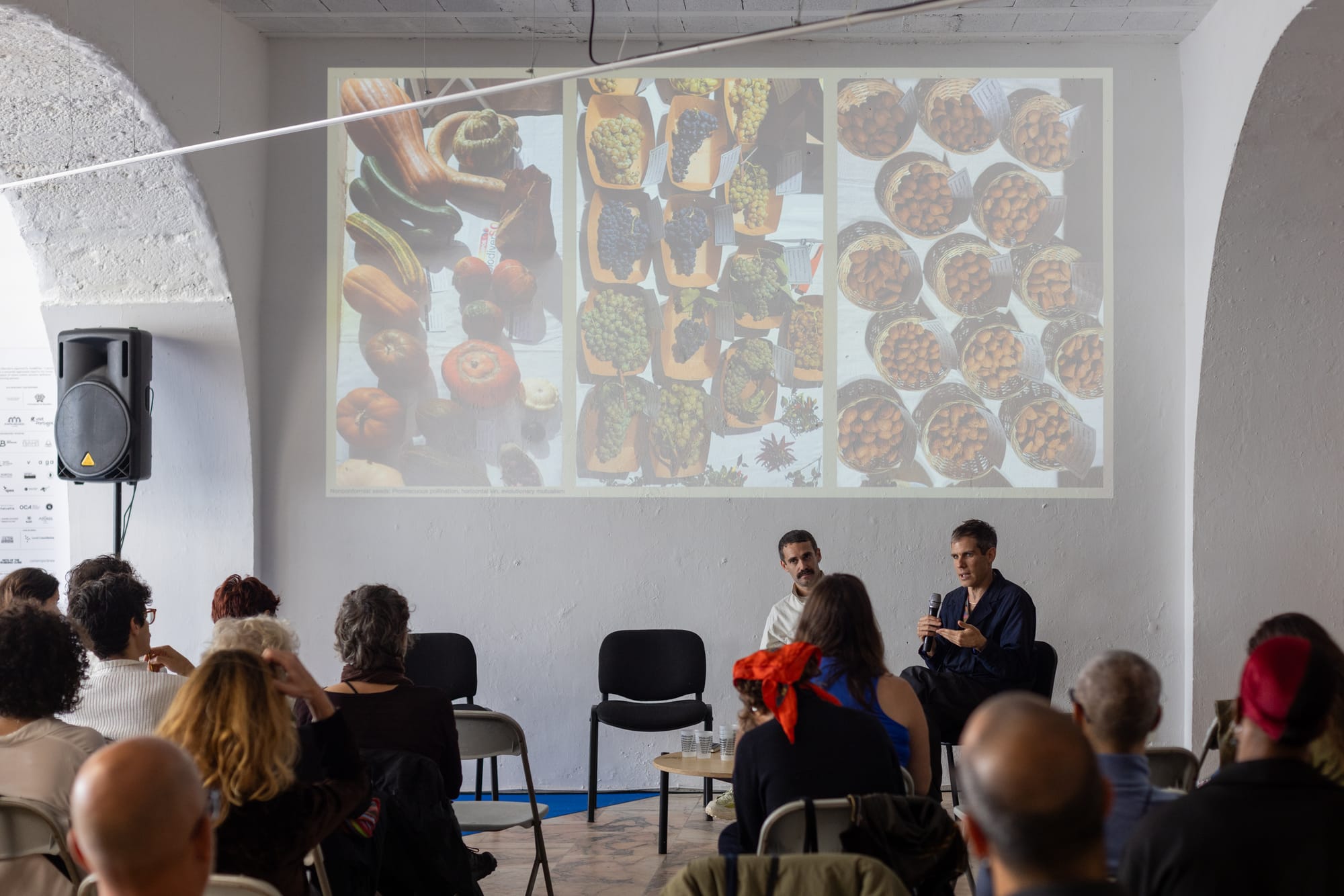
Fig.6
At the horizon of ruination, the first speakers of the day, the duo Cooking Sections, introduced the project CLIMAVORE, proposing ways to reclaim traditional land practices facing extinction. Their Wetlands Buffalo project in Istanbul terraforms mining wastelands; in southern Italy, they support cultivation rights for adaptive seeds that co-evolve with the climate. Italian law forbids trading these seeds as monoculture maintains its ecofascist landscape. By engaging Museo delle Culture, they give the seeds legal rights to propagate. The legal ground homogenizing agriculture mirrors a civil society where fascism fabricates alterity in order to extirpate it rather than coexist with it. The conversation concluded with inputs by Raquel Vargas.
The three-voice conversation "Archipelagic Realm: Diaspora in Motion" convened the practitioners Apolo de Carvalho, César Schofield Cardoso, and Sónia Vaz Borges. Cardoso posited that the so-called “Blue Economy” (intensive fishing and marine tourism) refuses space for the Black Atlantic to emerge as historical and psychological reclamation. De Carvalho poetically linked Verdian Creole with the colonial fabrication of hunger in Cape Verde, a struggle beginning and ending in the mouth, from digestion to linguistic resistance. Vaz Borges, a self-described “militant historian”, examined instances where resistance groups walked between places of struggle, movement as an archive of erased stories. Together, the speakers challenged scarcity as a tool of control, offering a new language to describe enduring colonial relational forms. Holding contradiction, walking between them, became the symposium's underlying methodology, a way of thinking that refuses binary opposition in favor of multiplicity.
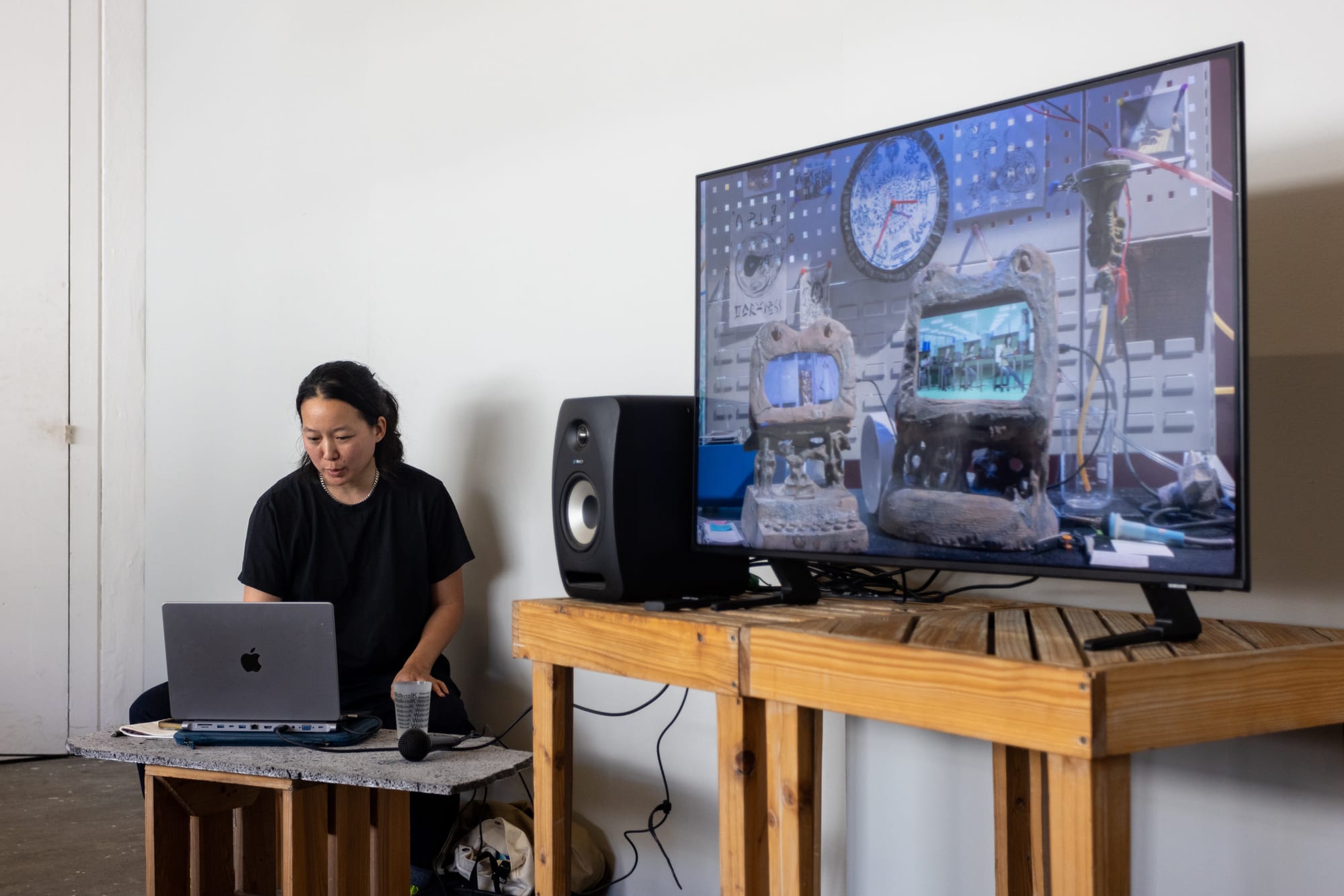
Fig.7
After lunch, our small symposium community, composed of participants and locals, walked toward VAGA - espaço de arte e conhecimento to attend Candice Lin’s lecture on the colonial life of materials. Lin traced how porcelain, that most coveted colonial commodity, carries within it a possessed quality, its factories haunted by the labor and violence of its production. She examined how the aesthetic and temporal qualities of stone evoke longing and desire, showing how these libidinal economies are deeply entangled with histories of colonialism, extraction, and global politics. What Lin made visible was how materials themselves become vessels of colonial memory, how our desire for certain textures, colors, and forms is never innocent but rather is shaped by centuries of violent accumulation. Her lecture connected materials to the appetite that drives extraction, the same appetite that depleted the Azores through monoculture, that has punctured whales’ lungs in the waters surrounding us, and that continues to fabricate scarcity while hoarding abundance elsewhere.
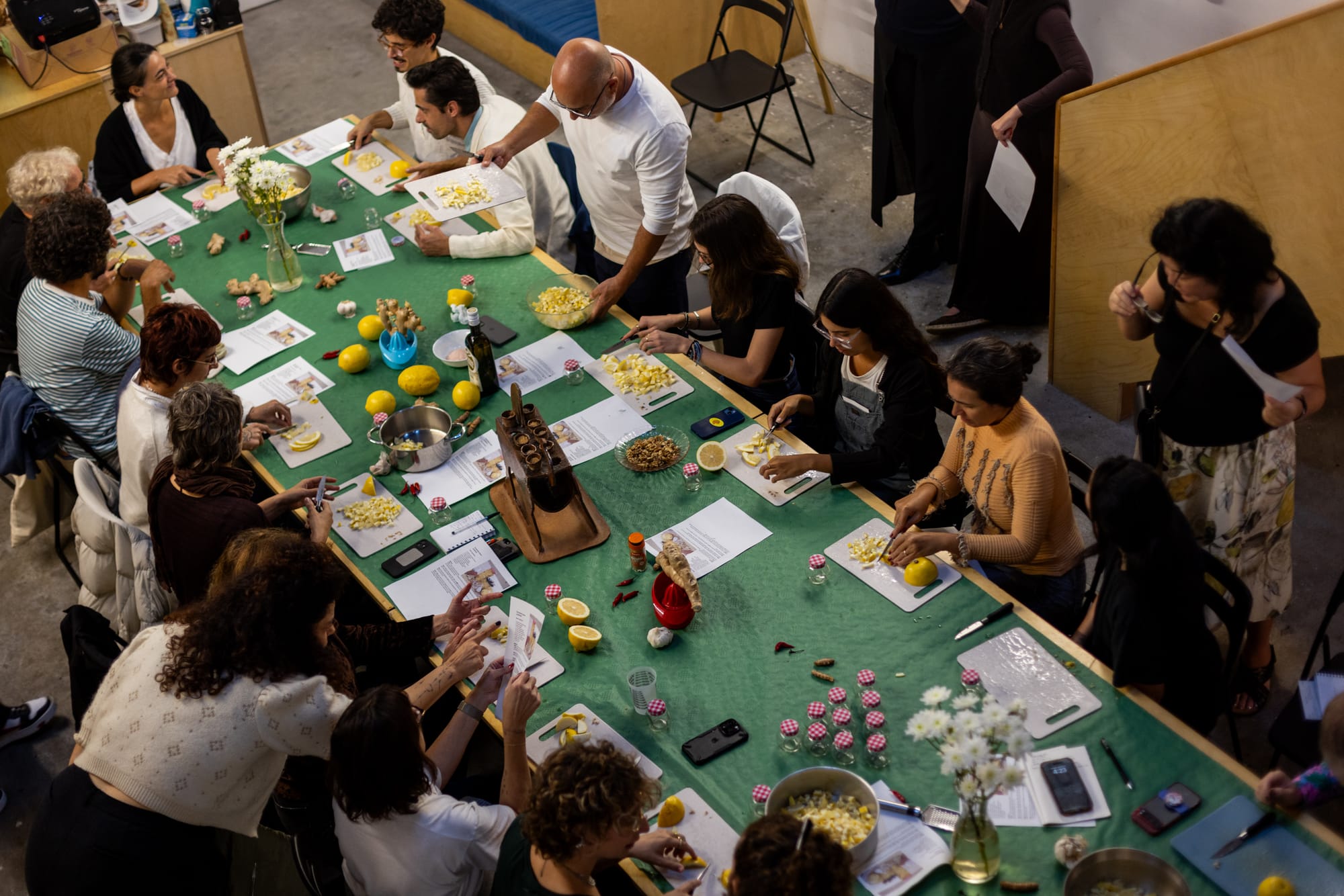
Fig.8
Waiting for the beginning of “Sour Things”, the fermentation workshop held by Mirna, I browsed through the space. I tangled myself in Resolve Collective's new commission, The Gallivantation of the Promise, in which they explored, with San Miguel locals, “wandering” as a method of knowledge and counter-cartography. I got hypnotized by Meg Stuart & Pact’s film, Sulphur Edges (2025). The moving images unfold among the thermal sites of São Miguel, where performers embrace elemental forces and the environment. Between silence and tremor, containment and release, I found myself thinking about the waves I had encountered during my morning stroll. Recalled by Mirna, I spent one hour around a long table, chopping lemons and spices, getting to know the sites of belonging and longing of other participants, fostering relationships tinted by the orange of the turmeric. I keep with me in Berlin the delicious fermenting goods we created.
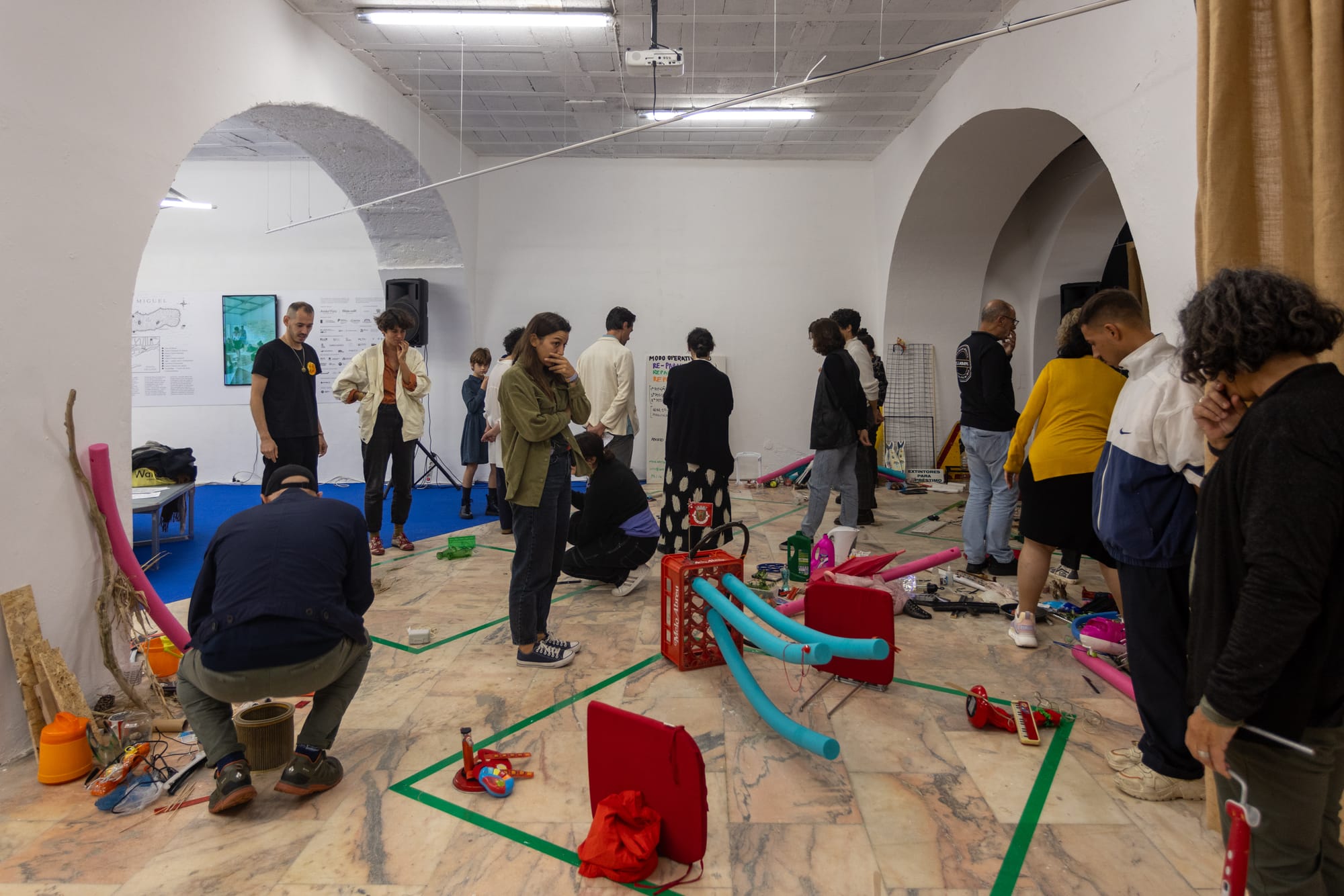
Fig.9
While approaching the last activity of my stay in the Azores, at Casa da Bienal, I encountered a clear sky and a sun nearly setting at the rim of the horizon, showing off in all its radiating beauty. It was an energizing moment that carried me to the activity organized by AND Lab, an infinite game of negotiation between people and objects. Prototyped by Fernanda Eugénio, the game rethinks forms of reciprocity, attention, and coexistence.
The intricacy of practices of a biennial opens up the Azorean territory more intimately than any map could, and, in doing so, challenges modes of isolation that are prototyped inland and exported, in their violence, to the islands. The symposium’s methodology revealed that isolation is never purely geographical; it is epistemic, economic, and relational. The Azores, like so many peripheralized places, have been isolated by extractive logics that position them as a resource, a backdrop, or a service. But the practitioners gathered here demonstrated that connection persists in mythologies, in fermentation rituals, in seed exchanges, in breath shared across waters.
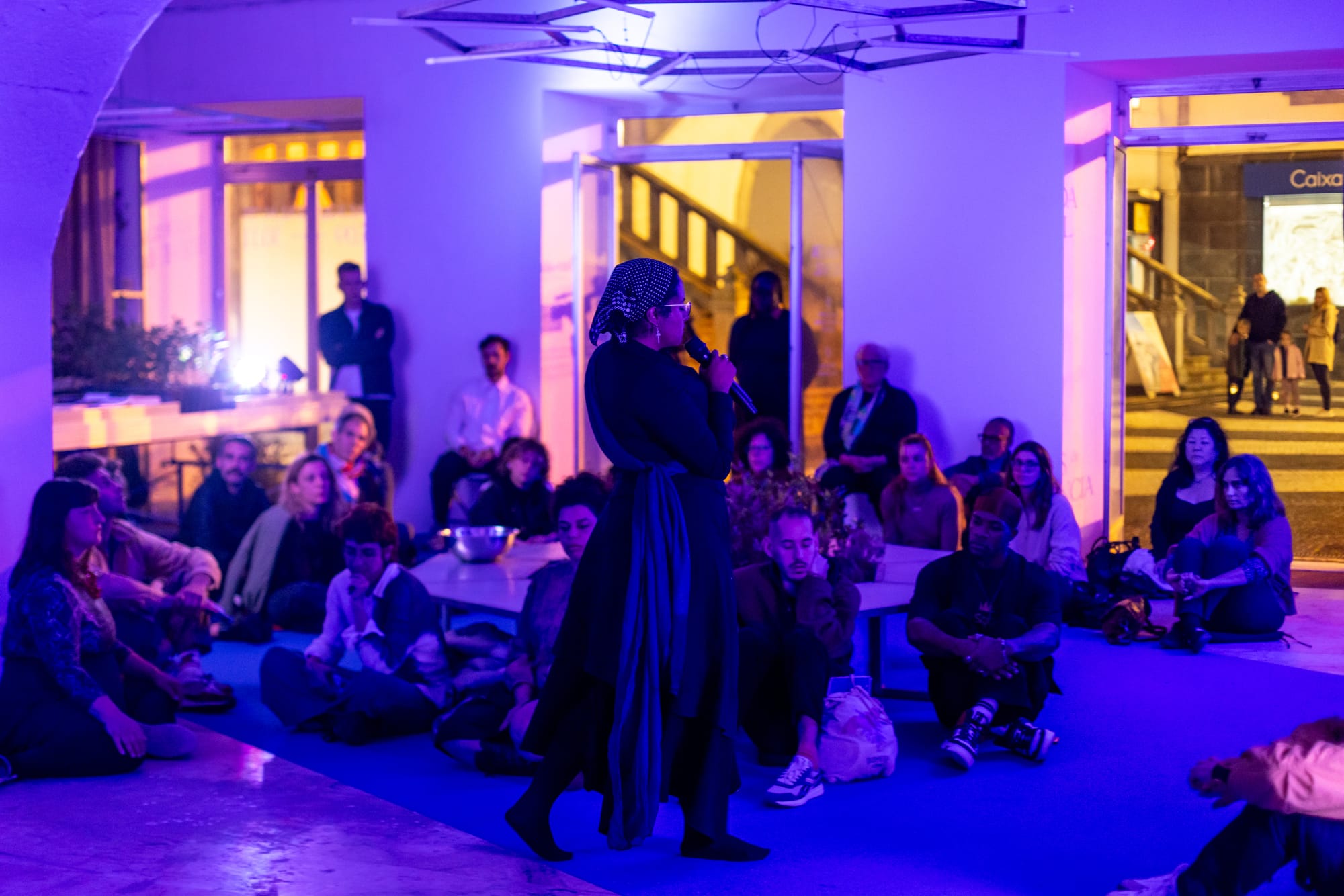
Fig.10
On my second and final evening, Janilda Bartolomeu presented Learning How to Breathe, a sonic meditation and performance born from her fascination with the whaling histories connecting the Azores and Cape Verde, rooted in the act of puncturing cetacean lungs, and the relation to breathing. It is a rumination on breathing in circumstances that should be impossible; we joined her ritual of vorticity to seek paths toward existential interdependence with respirational knowledge as a compass.
The Azores taught me that gestures of abundance are small, repeated, and relational; they reclaim land, food, water sovereignty, and dignity, and, in their smallness, they can spread everywhere. The question of abundance must necessarily be tackled on the small scale first, the local and the terrestrial. It resides in stories that are built toward the collective. Where scarcity is systemic, imposed by colonial inheritance and capitalist structuring, abundance belongs to the imagination and how it is harnessed to resist and to build. Abundance is not the opposite of scarcity but its refusal, a reclamation of what has always been there, concealed by the gaze that benefits from declaring it absent.
//
Images
Cover: W&T BIENAL 2025, Simposio, Day 3 Coletiva Malva @Mariana Lopes
Fig.1 BIENAL 2025, Excursao Evolvidas @MarianaLopes
Fig.2 W&T BIENAL 2025, Simposio Day 1, INLAND & Maria Emanuel Albergaria ©MarianaLopes
Fig.3 W&T BIENAL 2025, Mirna Bamieh @MarianaLopes
Fig.4 W&T BIENAL 2025, Walla Capelobo @MarianaLopes
Fig.5 W&T BIENAL 2025, Alice Vicentin @MarianaLopes
Fig.6 W&T BIENAL 2025, Simposio Day2,Cooking Sections & RaquelVargas @MarianaLopes
Fig.7 W&T BIENAL 2025, Simposio Day2,Candice Lin @MarianaLopes
Fig.8 W&T BIENAL 2025, Simposio Day2, Mirna Bamieh @MarianaLopes
Fig.9 W&T BIENAL 2025, Simposio Day2, ANDLab @MarianaLopes
Fig.10 W&T BIENAL 2025, Simposio Day2, Janilda Bartolomeu @MarianaLopes
Dalia Maini is a writer, spoken words performer, cultural agitator, and AWC editor in chief.